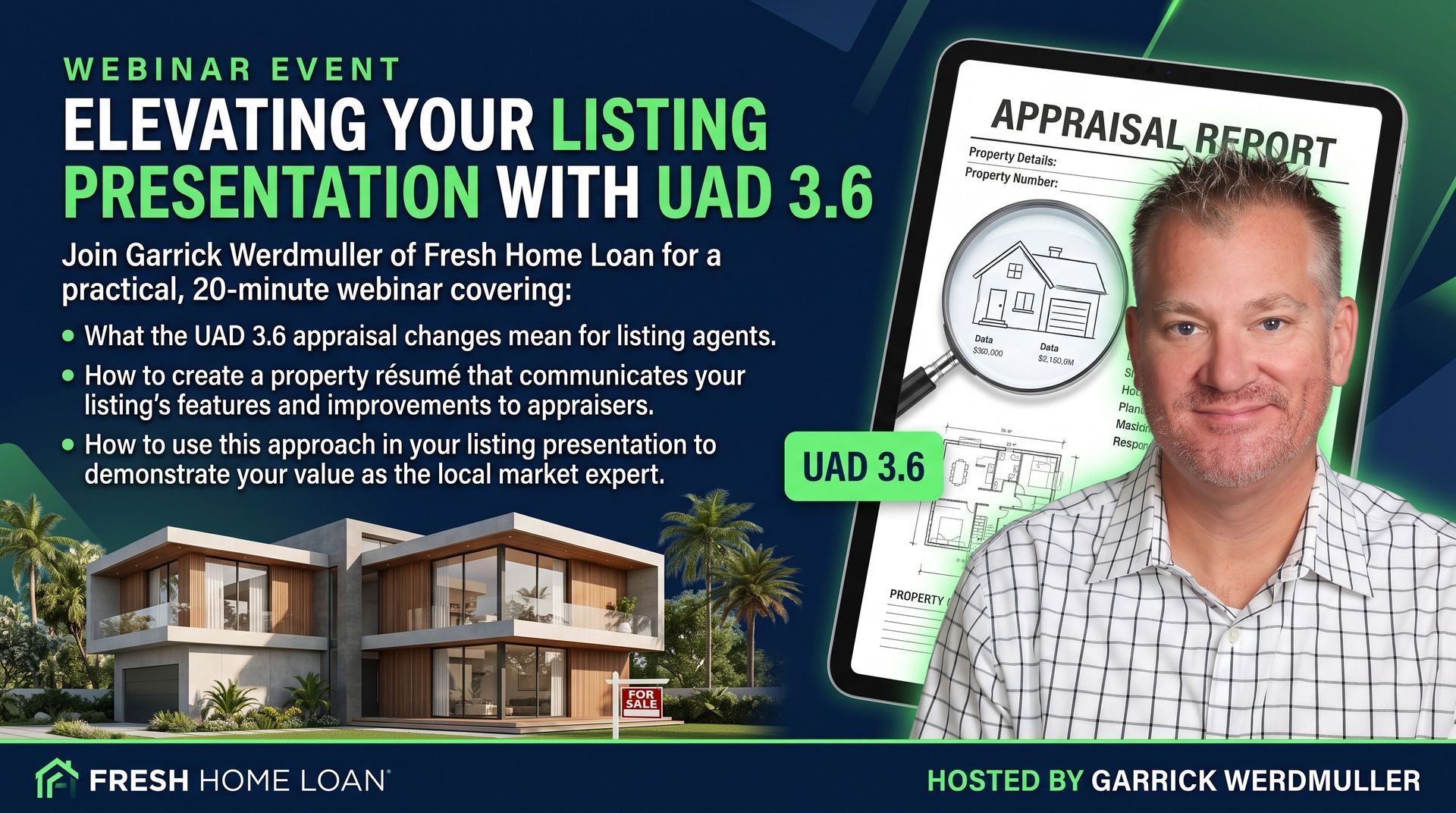
Elevating Your Listing Presentation with UAD 3.6
Win more listings by showing sellers the value of your local expertise

Appraisals are changing. Is your listing presentation?
For real estate agents, the transition to UAD 3.6 creates an opportunity to show sellers how much preparation goes into a successful sale. Understanding the changes can help you ask better questions about the property, document improvements, and demonstrate why your local expertise matters.
A seller may never ask about appraisal data standards. But they will care about whether you understand their home, recognize the improvements they have made, and prepare for questions that could arise during the transaction.
One practical way to demonstrate that preparation is to create a résumé for the property.
What Is UAD 3.6?
UAD stands for Uniform Appraisal Dataset. It defines how appraisal information is organized and reported for applicable Fannie Mae and Freddie Mac loans.
The Uniform Residential Appraisal Report, or URAR, presents that information in the report people read.
Think of UAD as the common language behind the appraisal and the URAR as the document that communicates it.
Fannie Mae and Freddie Mac have redesigned the dataset and reporting structure to support a single, flexible, dynamic appraisal report. The new approach replaces the collection of legacy GSE appraisal forms with a report that adapts to the property and the assignment. singlefamily.fanniemae.com
For listing agents, that makes accurate property information an especially useful part of preparing a home for sale.
Specific Details Tell a Better Property Story
Consider the difference between these two descriptions:
“Updated throughout.”
And:
“Kitchen improvements completed in 2024 included new cabinets, quartz countertops, and appliances. The HVAC system was replaced in 2022, and the roof covering was replaced in 2019.”
The second description gives someone concrete information to investigate and evaluate. It also helps buyers understand what the seller actually improved.
Terms such as “updated,” “renovated,” and “remodeled” can mean different things to different people. Documenting the work gives those descriptions substance.
Was the kitchen project a cosmetic refresh? Were cabinets replaced? Did plumbing or electrical work occur? Were walls moved? Did the project add living area?
These are useful questions before you write the listing description or prepare for the appraisal.
An improvement’s cost does not automatically equal its contribution to market value. Your role is to make accurate information available so the appraiser can independently evaluate the property and relevant market evidence.
Introduce the Property Résumé
You bring your professional experience to a listing appointment. Why not bring an organized history of the house, too?
A property résumé brings together the home’s characteristics, improvement history, and supporting records in one accessible resource.
It can help you prepare accurate marketing materials, answer buyer questions, and provide useful factual background to the appraiser.
Inspectors may also find the improvement history helpful when reviewing the property.
A property résumé is an agent preparation tool. It does not replace an appraisal, inspection, or required disclosure, and UAD 3.6 does not require listing agents to create one.
It's value comes from the preparation behind it: learning the home’s history, identifying unanswered questions, and supporting statements with documentation wherever possible.
For a seller interviewing several agents, seeing that work can make your service easier to understand.
Start Before the Listing Appointment
Review the available property profile and public records before you meet with the seller.
Useful information includes:
- Property type and year built.
- Recorded bedrooms, bathrooms, and square footage.
- Lot size and assessor’s parcel number.
- Available ownership and sale history.
- Recorded property characteristics.
- Available permit and building information.
Compare those records with the seller’s description and what you observe.
Perhaps the seller describes a fourth bedroom while the property profile shows three. Maybe the garage has been converted, or an addition appears larger than the recorded living area.
Those differences deserve questions.
Public records can be incomplete or outdated. A seller’s recollection may also need confirmation. Keep the source of each fact clear and flag discrepancies for verification.
Walking into the appointment with informed questions shows the seller that you have already started learning about their property.
Interview the Seller About the Home’s History
The seller often knows details that never appear in the property profile.
Instead of asking only, “Have you made any improvements?” ask questions that uncover the scope and history of the work:
- What improvements have you made, and when?
- What exactly did each project include?
- Were walls moved or rooms added?
- Were permits required, and are the records available?
- Do you have receipts, plans, warranties, or before-and-after photos?
- When were major systems replaced?
- Is there an ADU, addition, or converted space?
- If the home has solar, is the system owned, financed, or leased?
A seller who says, “We remodeled the bathroom a few years ago,” may have records showing the completion date and exactly what changed.
That information helps you describe the property accurately. It also gives you an opportunity to address missing documentation before the home goes on the market.
What Should the Property Résumé Include?
Keep the main document easy to scan. Organize supporting records separately so someone can find them when needed.
Property Overview
Include the address, property type, recorded characteristics, and sources used. Identify information that still needs confirmation.
Improvement Timeline
List major projects by year, describe the work, and note available documentation.
For example:
2024 — Kitchen: New cabinets, quartz countertops, and appliances. Seller reports that the layout remained unchanged. Receipts available.
2022 — HVAC: System replaced. Installation invoice available.
2019 — Roof: Roof covering replaced. Warranty information available.
Major Systems and Features
Document relevant information about heating and cooling, windows, plumbing, electrical systems, solar, and energy improvements.
Lot and Location
Include factual site characteristics, access, views, and other details that help explain the property.
Your local knowledge can help identify which features deserve further attention and how comparable homes differ.
Items to Verify
Make unanswered questions visible. These might include record discrepancies, permit questions, or information awaiting documentation.
Supporting Materials
Organize relevant receipts, permits, plans, photographs, and warranties.
Clearly label seller-reported information when you have not verified it. If you include comparable sales, explain why they may be relevant while respecting the appraiser’s independent selection and analysis.
Put AI to Work Organizing the Facts
AI can help turn a property profile into a first draft. It can group information, suggest seller interview questions, and highlight missing details.
Here is a prompt you can adapt:
I am building a Property Résumé for [PROPERTY ADDRESS].
Review the attached Property Profile and organize the information under these headings:
Property Overview
Property Characteristics
Lot and Site Information
Ownership and Sale History
Recorded Property Information
Documented Improvements or Features
Information That Should Be Verified
Questions to Ask the Seller
Use only information in the attached profile. Do not guess or invent missing details. Identify the source of each fact where possible, distinguish missing information from confirmed information, and flag discrepancies for review.
Review every fact before sharing the result. Remove unnecessary personal information before uploading documents and choose tools appropriate for the information you are handling.
Your local knowledge makes the draft useful. You recognize neighborhood differences, know which records need another look, and can ask follow-up questions that a document cannot answer.
That is a meaningful way to explain your use of technology to sellers: you use it to support better preparation, then apply your experience and judgment.
How to Present This to a Potential Seller
You do not need to turn the listing appointment into a technical lecture. Connect the preparation directly to the seller’s home.
Here is language you can use:
“Here’s something we do to prepare your home for sale: we build a résumé for the property.
“Just like a professional résumé highlights someone’s experience, this document organizes your home’s features, improvements, and history. We gather available records and work with you to document what has changed.
“With appraisal reporting and technology evolving, clear property information is increasingly useful. This gives us a resource for marketing your home and answering questions during the transaction.
“You know your home’s story. My job is to help tell it accurately and support it with documentation.”
Bring a sample so the seller can see what you mean.
A polished example makes your preparation tangible. It gives the seller something specific to evaluate when comparing your services with another agent’s proposal.
Understand the Rollout Dates
As of October 13, 2026, November 2, 2026 remains the UAD 3.6 mandate date for applicable new appraisal submissions to the Uniform Collateral Data Portal.
Fannie Mae and Freddie Mac announced a temporary policy exception on September 30 for lenders that need additional implementation time. Lenders must request and receive an exception from each applicable GSE. Approved lenders may continue submitting UAD 2.6 reports through May 19, 2027 while completing their transition. singlefamily.fanniemae.com
Give Sellers a Reason to Choose Your Preparation
A stronger listing presentation demonstrates the work you will do.
Review the property records. Interview the seller. Document improvements. Use AI to organize the facts, then apply your judgment and local knowledge. Prepare for questions before the transaction is underway.
UAD 3.6 gives agents a timely reason to revisit that process. A property résumé gives sellers something they can see.
When you understand the home’s history and explain how you will use that information, your local expertise becomes part of a clear service the seller can value.
Want to discuss the appraisal transition or put our listing marketing tools to work? Contact Fresh Home Loan.
Garrick Werdmuller
President & CEO, Fresh Home Loan Inc.
Bay Area: (510) 282-5456 — call or text
Bakersfield: (661) 998-9588 — call or text
Email:
garrick@freshhomeloan.com
Website:
freshhomeloan.com
Independent Mortgage Brokers that Work for the People.
#UAD36 #PropertyResume #ListingPresentation #AppraisalChanges #RealEstateAgents #RealtorMarketing #ListingAgent #LocalExpertise #AIForRealEstate #RealEstateTechnology #FreshHomeLoan #GarrickWerdmuller