Digital 411

Thinking about buying a home while mortgage rates are high? Learn how less competition, seller credits and negotiating power could save you money.

Looking to Consolidate Debt and do some Home Improvement? Got a “COVID Mortgage Rate”? Don’t Touch It!!!

Para muchos propietarios de 62 años o más , una hipoteca inversa puede ser mucho más que un préstamo: puede ser una poderosa herramienta de planificación financiera. Después de pasar décadas acumulando capital en una vivienda, muchos jubilados descubren que una parte importante de su patrimonio está concentrada en su propiedad. Una hipoteca inversa puede ayudar a aprovechar parte de ese capital y convertirlo en fondos disponibles, al mismo tiempo que permite a los propietarios continuar viviendo en la casa que aman. Aunque una hipoteca inversa no es adecuada para todos, puede ofrecer beneficios importantes para el prestatario adecuado. A continuación, presentamos cinco razones por las que vale la pena considerar una hipoteca inversa. 1. Generar Ingresos Adicionales Durante la Jubilación La jubilación suele implicar un cambio importante en el estilo de vida. Aunque los años de trabajo hayan quedado atrás, los gastos mensuales no desaparecen. Para muchos jubilados, una hipoteca inversa puede ayudar a cerrar la brecha entre los ingresos de jubilación y los gastos cotidianos. Los fondos recibidos de una hipoteca inversa pueden utilizarse para: Complementar los ingresos de jubilación Cubrir gastos del hogar Crear una red de seguridad financiera Mejorar el flujo de efectivo durante la jubilación Debido a que los fondos de una hipoteca inversa son dinero proveniente de un préstamo y no ingresos obtenidos por trabajo, generalmente no se consideran ingresos sujetos a impuestos. Para los propietarios que cuentan con un capital considerable en su vivienda, pero tienen activos líquidos limitados, una hipoteca inversa puede proporcionar una valiosa flexibilidad financiera. 2. Acceder al Capital de tu Vivienda de la Manera que Mejor se Adapte a Ti Una de las principales ventajas de una hipoteca inversa es la flexibilidad. Dependiendo del programa, los propietarios pueden elegir recibir los fondos como: Una suma global Pagos mensuales Una línea de crédito Una combinación de diferentes opciones de pago Esta flexibilidad permite adaptar el préstamo de acuerdo con los objetivos financieros y las necesidades de jubilación de cada propietario. Ya sea que necesites ingresos mensuales constantes o acceso ocasional a fondos, una hipoteca inversa puede estructurarse para adaptarse a tu situación. 3. Eliminar los Pagos de una Hipoteca Existente Muchos propietarios utilizan una hipoteca inversa para liquidar una hipoteca tradicional existente. Al eliminar un pago hipotecario mensual, los jubilados pueden mejorar significativamente su flujo de efectivo mensual. Para los propietarios que viven con ingresos fijos durante la jubilación, eliminar uno de sus gastos mensuales más importantes puede hacer que administrar el presupuesto sea mucho más sencillo. Aunque los prestatarios deben continuar pagando los impuestos sobre la propiedad, el seguro de vivienda y mantener la propiedad en buenas condiciones, eliminar un pago hipotecario mensual puede proporcionar un alivio financiero considerable. 4. Ayudar a Cubrir Gastos Inesperados La vida está llena de imprevistos, y algunos de los más costosos pueden estar relacionados con gastos médicos, reparaciones del hogar o emergencias familiares. Una hipoteca inversa puede proporcionar acceso a fondos cuando más se necesitan. Muchos propietarios utilizan los fondos de una hipoteca inversa para: Pagar gastos médicos Financiar modificaciones en la vivienda Cubrir costos de cuidados a largo plazo Realizar reparaciones importantes Crear un fondo para emergencias Tener acceso al capital acumulado en la vivienda puede ayudar a los jubilados a evitar depender de tarjetas de crédito con altas tasas de interés, préstamos personales o retirar fondos adicionales de sus cuentas de jubilación durante momentos difíciles. 5. Protección Incorporada Mediante un Préstamo Sin Recurso Una de las protecciones más importantes para los consumidores de las hipotecas inversas asegurad as por la FHA es que son préstamos sin recurso (non-recourse loans). Esto significa que ni el prestatario ni sus herederos deberán pagar más que el valor de la vivienda cuando el préstamo llegue a su vencimiento y sea exigible. Si eventualmente el saldo del préstamo supera el valor de la vivienda, el seguro hipotecario de la FHA cubre la diferencia. Esta protección puede brindar tranquilidad tanto a los propietarios como a sus familias, especialmente durante períodos de incertidumbre en el mercado inmobiliario. ¿Es una Hipoteca Inversa Adecuada para Ti? Una hipoteca inversa no se trata simplemente de pedir dinero prestado: se trata d e crear opciones. Para algunos propietarios, puede ayudar a mejorar el flujo de efectivo durante la jubilación, eliminar pagos hipotecarios mensuales, preservar cuentas de inversión y proporcionar una mayor seguridad financiera. La clave está en comprender cómo funciona el programa y evaluar si se alinea con tus objetivos a largo plazo. La situación de cada propietario es diferente. Por eso, hablar con un especialista experimentado en hipotecas inversas puede ayudarte a determinar si una hipoteca inversa es una buena opción para tu estrategia de jubilación. Reflexiones Finales Para los propietarios que cumplen con los requisitos, una hipoteca inversa puede ser una forma valiosa d e poner el capital acumulado en su vivienda a trabajar, sin tener que venderla ni asumir un pago hipotecario mensual obligatorio. Cuando se utiliza de manera estratégica, puede ayudar a crear flexibilidad, reducir el estrés financiero y proporcionar recursos adicionales durante la jubilación. Las mejores herramientas financieras son aquellas que respaldan tus objetivos y, para muchos jubilados, una hipoteca inversa puede ser una de ellas. Agenda una Consulta Contacta a Fresh Home Loan hoy mismo para analizar tus opciones con un profesional hipotecario con experiencia. https://freshhomeloan.com/schedule-a-meeting/ Garrick Werdmuller President & CEO Fresh Home Loan Inc. 510-282-5456 NMLS 242952 Diana Diaz Operations Manager 510-751-0303 customercare@freshomeloan.com Síguenos en redes sociales: https://www.facebook.com/freshhomeloan/ https://www.instagram.com/garrickwerdmuller/ https://www.linkedin.com/in/garrick-werdmuller-b044253/ https://www.youtube.com/@FreshHomeLoan https://www.tiktok.com/@freshhomeloan Todas las aprobaciones de préstamos están sujetas a revisión y aprobación final por parte del prestamista. Los préstamos se consideran aprobados únicamente cuando se emiten por escrito y se cumplen todas las condiciones. Las tasas y productos pueden no estar disponibles para todos los prestatarios y están sujetos a cambios según las condiciones del mercado y los términos de bloqueo de tasa. Fresh Home Loan Inc. es un Mortgage Broker de Igualdad de Oportunidades en California. Esta compañía realiza actos que requieren licencia de bienes raíces. Fresh Home Loan, Inc. está licenciada por el California Department of Real Estate #02137513 | NMLS #2124104. #HipotecaInversa #HECM #PlanificacionParaLaJubilacion #CapitalDeVivienda #PropietariosDeVivienda #IngresosDeJubilacion #AsesorHipotecario #PlanificacionFinanciera #PropiedadDeVivienda #FreshHomeLoan #BienesRaices #LibertadFinanciera

Aunque tanto un HELOC como un HELOAN permiten a los propietarios acceder al capital acumulado en su propiedad sin tener que refinanciar su primera hipoteca existente, están diseñados para diferentes necesidades financieras. ¿Qué es un HELOC? Una Home Equity Line of Credit (HELOC), o línea de crédito sobre el valor acumulado de la vivienda, es una línea de crédito renovable respaldada por el capital de su propiedad. Puede considerarse similar a una tarjeta de crédito, pero generalmente con una tasa de interés mucho más baja porque está respaldada por su vivienda. En lugar de recibir todos los fondos de una sola vez, usted obtiene la aprobación para un límite máximo de crédito y puede retirar dinero según lo necesite durante el período de disposición. Esta flexibilidad hace que un HELOC sea particularmente atractivo para propietarios que tienen gastos continuos o cuyos costos aún no están completamente definidos. Por ejemplo, si está remodelando una cocina, construyendo una ADU (Accessory Dwelling Unit), pagando la matrícula universitaria durante varios semestres o simplemente quiere tener acceso a fondos para futuras oportunidades, un HELOC le permite pedir prestado únicamente lo que necesita y cuando lo necesita. En muchos casos, los propietarios pagan intereses solamente sobre la cantidad que realmente han utilizado, y no sobre el total de la línea de crédito aprobada. Un HELOC también puede funcionar como una red de seguridad financiera. Muchos propietarios establecen un HELOC y mantienen los fondos disponibles para emergencias, oportunidades de inversión o gastos inesperados. Debido a que el dinero está disponible cuando se necesita, ofrece una flexibilidad que un préstamo tradicional de suma global no puede proporcionar. ¿Qué es un HELOAN? Un Home Equity Loan (HELOAN), o préstamo sobre el valor acumulado de la vivienda, es una segunda hipoteca tradicional que proporciona una cantidad fija de dinero en un solo desembolso inicial. A diferencia de un HELOC, donde los fondos pueden utilizarse a lo largo del tiempo, un HELOAN entrega el monto total del préstamo al momento del cierre y se paga mediante mensualidades fijas durante un plazo determinado. Muchos propietarios prefieren un HELOAN cuando saben exactamente cuánto dinero necesitan y quieren la tranquilidad de contar con un pago fijo y predecible. Si está financiando un proyecto importante de mejora de su vivienda con un presupuesto definido, pagando deudas con tasas de interés elevadas, comprando una propiedad de inversión o cubriendo un gasto grande de una sola vez, un HELOAN puede ofrecer certeza y estructura. Debido a que el monto del préstamo, el pago mensual y el calendario de pagos quedan establecidos desde el cierre, muchos prestatarios valoran la simplicidad de saber exactamente cuánto deberán pagar cada mes. No es necesario administrar diferentes retiros de fondos ni preocuparse por saldos fluctuantes. Para los propietarios que prefieren una solución de financiamiento sencilla y estructurada, un HELOAN puede ser una excelente opción. ¿Cuál Opción es Mejor? La respuesta depende de sus objetivos. Si necesita flexibilidad , quiere tener acceso continuo a fondos o espera que sus gastos ocurran a lo largo del tiempo, un HELOC puede ser la opción que mejor se adapte a sus necesidades. Si sabe exactamente cuánto dinero necesita y prefiere un pago fijo con un calendario de liquidación definido , un HELOAN puede ser una opción más conveniente. La buena noticia es que ambos productos pueden permitir a los propietarios acceder al capital acumulado en su vivienda sin modificar su primera hipoteca existente. Para los propietarios que aseguraron tasas hipotecarias históricamente bajas, esto puede representar una ventaja significativa frente a refinanciar el saldo total de su hipoteca a las tasas actuales del mercado. ¿Te gustaría saber qué opción es adecuada para ti? Para programar una cita con Garrick Werdmuller, Presidente y CEO de Fresh Home Loan Inc. , visite: https://freshhomeloan.com/schedule-a-meeting/ Garrick Werdmuller President & CEO Fresh Home Loan Inc. 510-282-5456 NMLS 242952 Diana Diaz Operations Manager 510-751-0303 customercare@freshomeloan.com Redes Sociales https://www.facebook.com/freshhomeloan/ https://www.instagram.com/garrickwerdmuller/ https://www.linkedin.com/in/garrick-werdmuller-b044253/ https://www.youtube.com/@FreshHomeLoan https://www.tiktok.com/@freshhomeloan Todas las aprobaciones de préstamos están sujetas a revisión y aprobación final por parte del prestamista. Los préstamos se consideran aprobados únicamente cuando se emiten por escrito y se cumplen todas las condiciones. Las tasas y productos pueden no estar disponibles para todos los prestatarios y están sujetos a cambios según las condiciones del mercado y los términos de bloqueo de tasa. Fresh Home Loan Inc. es un Mortgage Broker de Igualdad de Oportunidades en California. Esta compañía realiza actos que requieren licencia de bienes raíces. Fresh Home Loan, Inc. está licenciada por el California Department of Real Estate #02137513 | NMLS #2124104. #HELOC #HELOAN #PropietariosDeVivienda #ConsejosParaPropietarios #Hipotecas #FinanzasPersonales #FinanciamientoDeVivienda #AgenteInmobiliario #FreshHomeLoan #BienesRaices #ConstruccionDePatrimonio #AsesoriaHipotecaria #LibertadFinanciera

BAKERSFIELD, Calif. — Fresh Home Loan Inc., an Independent California mortgage brokerage, is proud to announce its expansion into Bakersfield, bringing homebuyers, homeowners, real estate professionals, and investors greater access to competitive financing solutions and personalized mortgage guidance. Unlike traditional banks that offer only their own loan products, Fresh Home Loan works with a network of wholesale lenders to help clients find financing that best fits their unique financial goals and circumstances. "We're excited to bring our independent mortgage brokerage model to Bakersfield," said Garrick Werdmuller, President and Broker of Record at Fresh Home Loan. "Every client has a different story, and having access to multiple lending partners allows us to explore more financing solutions than a single lender can typically provide." Fresh Home Loan offers a wide range of mortgage programs, including: Conventional, FHA, VA, and Jumbo financing First-time homebuyer programs Low down payment and zero down payment options for qualified borrowers Bank statement loans for self-employed borrowers DSCR investor loans ITIN financing Private money and bridge financing HELOCs and home equity solutions Construction and renovation financing Reverse mortgages The Bakersfield expansion also strengthens Fresh Home Loan's commitment to supporting the local real estate community. The company plans to host educational workshops, networking events, and marketing collaborations designed to help real estate professionals grow their businesses while providing valuable education to consumers throughout Kern County. Fresh Home Loan's mission is simple: provide honest advice, competitive loan options, fast communication, and exceptional customer service from application to closing. "Our goal isn't simply to close loans," Werdmuller added. "We want to become a trusted mortgage resource for families, Realtors, builders, and investors throughout Bakersfield and Central California." For more information about Fresh Home Loan or to schedule a complimentary mortgage consultation, visit FreshHomeLoan.com or contact the Bakersfield office. About Fresh Home Loan Inc. Fresh Home Loan Inc. is an independent California mortgage brokerage dedicated to helping clients achieve homeownership through education, personalized service, and access to a broad network of wholesale lending partners. Serving communities throughout California, Fresh Home Loan offers financing solutions for first-time buyers, move-up buyers, investors, and homeowners seeking to refinance or leverage their home equity. Garrick Werdmuller President CEO Fresh Home Loan Inc 510.282.5456 call/text NMLS 242952 www.FreshHomeLoan.com Socials: https://www.facebook.com/freshhomeloan/ https://www.instagram.com/garrickwerdmuller/ https://www.linkedin.com/in/garrick-werdmuller-b044253/ https://www.youtube.com/@freshhomeloan-garrickwerdm316 All loan approvals are conditional and not guaranteed and subject to lender review of all information. Loan is conditionally approved when lender has issued approval in writing, but until all conditions are met, loan cannot be funded. Specified rates and [products may not be available to all borrowers. Rates subject to change according to market conditions and agreed upon lock times set by borrower. Fresh Home Loan Inc. is an Equal Opportunity Mortgage Broker in California. This licensee is performing acts for which a real estate license is required. Fresh Home Loan, Inc. is licensed by the California Department of Real Estate #02137513 NMLS # 2124104

"Wait... I didn't know that. Maybe I qualify." "Here's something most homebuyers don't know." "Every mortgage has a set of guidelines, whether it is conventional to Jumbo, FHA, VA, USDA, ITIN, Revers Mortgage, whatever – there is an investor that purchases that loan according to a set of guidelines.” "But many lenders and especially the big banks add something called 'overlays.' " "An overlay is simply an extra rule the bank creates to reduce its own risk." For example, maybe the loan program allows a 620 credit score—but that bank won't go below 680. Or maybe the program allows a higher debt-to-income ratio say 43% but the bank only goes to 38% —but the bank has a stricter limit." "As an independent mortgage broker, I work with multiple wholesale lenders." "If one lender has stricter overlays, another lender may follow the standard program guidelines more closely or offer a different program that fits your situation." "That doesn't mean every loan can be approved—but it does mean one 'no' isn't always the final answer." According to the CFPB: Consumer Financial Protection Bureau these are the 3 most common reasons a loan is denied and how we can help: 1. Income This is the #1 reason. Examples: Self-employed with large tax write-offs. Commission or bonus income that's difficult to document. Retirees living on assets. Real estate investors. 1099 contractors. Recently changed jobs. Many banks have more conservative debt to income ratio overlays, leaving the borrower qualify for less. They also may not have niche loans for self-employed borrowers who sometimes have trouble qualifying off tax returns. Often times, real estate investors have deductions on that make it difficult to cash flow on their returns. Independent mortgage brokers like Fresh Home Loan Inc. can often access lenders that accept: Bank statement loans Asset utilization/depletion DSCR loans for investors Alternative income documentation 2. Credit Every lender has different overlays. Examples: Credit score just below the bank's minimum. Limited credit history. Recent bankruptcy or foreclosure. A manual underwriting situation. One lender may decline the loan while another approves it under a different program. 3. The Property or Collateral The borrower may qualify, but the property doesn't. Examples: Non-warrantable condos Deferred maintenance Unique property Many times, large banks simply won't finance these situations, while Independent Mortgage brokers can. Unlike traditional banks that offer only their own loan products, Fresh Home Loan works with a network of wholesale lenders to help clients find financing that best fits their unique financial goals and circumstances. For more information: https://www.freshhomeloan.com/contact-us Call or text: 510.282.5456 Email: Garick@freshhomeloan.com Garrick Werdmuller President CEO Fresh Home Loan Inc 510.282.5456 call/text NMLS 242952 www.FreshHomeLoan.com Socials: https://www.facebook.com/freshhomeloan/ https://www.instagram.com/garrickwerdmuller/ https://www.linkedin.com/in/garrick-werdmuller-b044253/ https://www.youtube.com/@freshhomeloan-garrickwerdm316 All loan approvals are conditional and not guaranteed and subject to lender review of all information. Loan is conditionally approved when lender has issued approval in writing, but until all conditions are met, loan cannot be funded. Specified rates and [products may not be available to all borrowers. Rates subject to change according to market conditions and agreed upon lock times set by borrower. Fresh Home Loan Inc. is an Equal Opportunity Mortgage Broker in California. This licensee is performing acts for which a real estate license is required. Fresh Home Loan, Inc. is licensed by the California Department of Real Estate #02137513 NMLS # 2124104 #HomeLoans #MortgageTips #HomeBuying #FirstTimeHomeBuyer #Realtor #RealtorLife #MortgageBroker #Chase #WellsFargo

Thanks for visiting this page! I wanted to invite you to check out the system we're now using for our Open House marketing. I think it's a great opportunity for us to collaborate and help generate more leads together. It has a TON of features, including: 🏡 Property Websites Mobile-friendly listing websites Recently Sold property pages Lead capture tools Easy sharing on social media and email 🖨️ Print Marketing Open House Flyers Promotional Flyers Infographics Open House Sign-In Sheets Property Reports Jumbo Postcards Sign Riders 📢 Active Listing Marketing Coming Soon Flyers Just Listed Flyers Under Contract Flyers In Escrow Flyers Just Sold Flyers Go Green Flyers Property Reports and Marketing Pieces 📋 Listing Presentations Pre-Listing Presentations Neighborhood Reports Beautiful Infographics designed to help win listings 🏠 Buyer Resources Neighborhood Reports Buyer Infographics Market information to educate your clients 📬 Lead Generation Tools Sign Riders with lead capture Multiple postcard sizes and marketing campaigns Print and digital marketing working together Garrick Werdmuller President & CEO Fresh Home Loan, Inc. 🌐 https://freshhomeloan.com #ListingsToLeads #RealEstateMarketing #RealtorTools #ListingPresentation #OpenHouse #RealEstateLeads #MortgageBroker #FreshHomeLoan #RealtorSuccess #DigitalMarketing #RealEstateTechnology #LeadGeneration #RealEstateTraining #MarketingForRealtors

I was recently referred to a woman in need of financing assistance by a realtor buddy. She had a lot of problems with delinquent taxes, deferred maintenance on her properties, overdue bills, it was a bad situation. She had two properties: her primary residence and an investment property. They were both free and clear, so she had equity, the problem was she had no income and the houses were in such bad shape no one would lend on them. I actually had great confidence I could find a home for her investment property, but I was actually denied 18 times! However, #19 said, and I quote ”Garrick, I am not mad at this loan” and off we went! Within three weeks we were closed and funded. The borrower actually lost her phone and the realtor and I were worried and he drove to one house and I drove to the other and we found her! Got her signed and now she has cash to pay the taxes and bills, rehab the property, and get a new phone! Who do you know that will do as much as I will do for you? Questions? https://www.freshhomeloan.com/contact-us Socials: https://www.facebook.com/freshhomeloan/ https://www.instagram.com/garrickwerdmuller/ https://www.linkedin.com/in/garrick-werdmuller-b044253/ https://www.youtube.com/@FreshHomeLoan https://www.tiktok.com/@freshhomeloan All loan approvals are conditional and not guaranteed and subject to lender review of all information. Loan is conditionally approved when the lender has issued approval in writing, but until all conditions are met, loan cannot be funded. Specified rates and products may not be available to all borrowers. Rates subject to change according to market conditions and agreed upon lock times set by the borrower. Fresh Home Loan Inc. is an Equal Opportunity Mortgage Broker in California. This licensee is performing acts for which a real estate license is required. Fresh Home Loan, Inc. is licensed by the California Department of Real Estate #02137513 NMLS # 2124104 #HardMoney #RealEstate #HardMoneyLender #RealEstateInvesting #FixAndFlip #HardMoneyLoans #FreshHomeLoan #BayArea

Shopping for a HELOC or HELOAN? Learn the five most important factors to compare, including costs, appraisal requirements, loan options, and closing times before choosing a lender. 1. Do They Offer Multiple HELOC and HELOAN Programs? Not every lender has the same products. Some only offer one HELOC. Others don't offer fixed-rate HELOANs at all. Some have higher loan limits, lower minimum draws, or allow investment properties while others don't. At Fresh Home Loan, we shop multiple lenders to find the program that fits your goals—not force your goals into one lender's program. 2. What Will the Appraisal Cost You? One of the biggest surprises for homeowners is appraisal fees. Some lenders require a full appraisal that can cost hundreds of dollars and delay the process. Others may qualify for an Automated Valuation Model (AVM) or desktop valuation, saving both time and money. We'll tell you upfront what your property is likely to need before you spend a dime. 3. How Fast Can They Close? If you're consolidating debt, paying for a remodel, buying out a partner, or financing an ADU, timing matters. Many lenders take 30-60 days. We regularly close HELOCs and HELOANs much faster because we know the process and work with lenders that prioritize speed. The sooner your loan closes, the sooner you can put your equity to work. 4. What Are the Total Costs? Don't focus only on the interest rate. Compare: Closing costs Lender fees Annual fees Early payoff penalties (if any) Minimum draw requirements Fixed vs. variable rate options The lowest advertised rate isn't always the least expensive loan. We'll walk through every cost before you decide. 5. Can You Actually Reach Your Loan Officer? A HELOC isn't a one-size-fits-all loan. Questions come up about: Borrowing limits Draw periods Fixed-rate options Using funds for ADUs Debt consolidation Investment properties Working with someone who answers the phone and explains your options can save you thousands of dollars—and a lot of frustration. At Fresh Home Loan, you'll work directly with experienced mortgage professionals who guide you from application to funding. Ready to Put Your Home Equity to Work? Whether you're planning a remodel, consolidating debt, building an ADU, paying for college, or simply want access to your home's equity, we'll help you compare the best HELOC and HELOAN options available. Why homeowners choose Fresh Home Loan: Multiple HELOC and HELOAN programs Fast closings Low fees Honest advice with no pressure Experienced local mortgage professionals Apply today or contact Fresh Home Loan for a free, no-obligation review of your home's equity options. For more information give Garrick Werdmuller a call at 510.282.5456 or visit: https://freshhomeloan.com/schedule-a-meeting/ Garrick Werdmuller President CEO Fresh Home Loan Inc 510.282.5456 call/text NMLS 242952 www.FreshHomeLoan.com You may also enjoy: HELOC vs. HELOAN: Unlocking Your Home's Equity Without Touching Your First Mortgage https://www.freshhomeloan.com/heloc-vs-heloan-unlocking-your-home-s-equity-without-touching-your-first-mortgage HELOC vs Credit Card: Which Is Better for Homeowners? https://www.freshhomeloan.com/heloc-vs-credit-card-which-is-better-for-homeowners Understanding the Difference Between a HELOC and a HELOAN https://www.freshhomeloan.com/understanding-the-difference-between-a-heloc-and-a-heloan How Does a HELOC work? https://www.freshhomeloan.com/how-does-a-heloc-work Socials: https://www.facebook.com/freshhomeloan/ https://www.instagram.com/garrickwerdmuller/ https://www.linkedin.com/in/garrick-werdmuller-b044253/ https://www.youtube.com/@FreshHomeLoan https://www.tiktok.com/@freshhomeloan #HELOC #HELOAN #HomeEquity #HomeEquityLoan #HomeEquityLineOfCredit #CashOutRefinance #MortgageTips #HomeownerTips #HomeImprovement #ADU #DebtConsolidation #MortgageBroker #MortgageAdvice #RealEstate #Homeowners #FinancialFreedom #FreshHomeLoan #CaliforniaMortgage #BayAreaRealEstate #BakersfieldRealEstate All loan approvals are conditional and not guaranteed and subject to lender review of all information. Loan is conditionally approved when the lender has issued approval in writing, but until all conditions are met, loan cannot be funded. Specified rates and products may not be available to all borrowers. Rates subject to change according to market conditions and agreed upon lock times set by the borrower. Fresh Home Loan Inc. is an Equal Opportunity Mortgage Broker in California. This licensee is performing acts for which a real estate license is required. Fresh Home Loan, Inc. is licensed by the California Department of Real Estate #02137513 NMLS # 2124104

For years, the 30-year fixed mortgage has been the "default" choice for homebuyers. But if you're purchasing a higher-priced home that requires a jumbo loan, there may be a smarter option worth considering: the 7/6 Jumbo Adjustable-Rate Mortgage (ARM). With today's interest rates, many jumbo borrowers are discovering that a 7/6 ARM can provide a significantly lower initial interest rate than a traditional 30-year fixed mortgage, helping reduce monthly payments while increasing purchasing power. What Is a 7/6 Jumbo ARM? A 7/6 Jumbo ARM is a mortgage designed for loan amounts that exceed conforming loan limits. Here's how it works: Your interest rate is fixed for the first seven years. After those seven years, the rate adjusts every six months based on a published market index plus a predetermined margin. The loan includes adjustment caps that limit how much the rate can change over time. For many borrowers, seven years provides plenty of time before any adjustment could occur. Why Consider a Jumbo ARM? Lower Interest Rate One of the biggest advantages is that 7/6 Jumbo ARMs typically offer lower starting interest rates than comparable 30-year fixed mortgages. That lower rate may translate into: Lower monthly mortgage payments Greater purchasing power Reduced interest costs during the fixed-rate period For buyers shopping in competitive markets, this can make a meaningful difference. Who Is a Good Candidate? A 7/6 Jumbo ARM may be an excellent fit if you: Expect to move within seven years May refinance before the fixed period ends Receive bonuses or increasing income over time Prefer lower monthly payments today Are purchasing a luxury or high-value Why a 7/6 Jumbo ARM Could Be a Better Choice Than a 30-Year Fixed When most people think about getting a mortgage, they automatically assume a 30-year fixed loan is the only option. But if you're financing a higher-priced home with a jumbo loan , you may have another option that could save you money. A 7/6 Jumbo Adjustable-Rate Mortgage (ARM) often comes with a lower interest rate than a traditional 30-year fixed mortgage. That lower rate can translate into a lower monthly payment, reduced interest costs during the fixed period, and even greater buying power. How Does a 7/6 Jumbo ARM Work? A 7/6 Jumbo ARM keeps your interest rate fixed for the first seven years of the loan. During that time, your payment remains stable, just like a fixed-rate mortgage. After the initial seven-year period, the interest rate adjusts every six months according to the terms of the loan and current market conditions. These loans also include adjustment caps that limit how much the rate can change. Why Are Buyers Choosing a 7/6 Jumbo ARM? Many homebuyers don't keep the same mortgage for 30 years. Life changes, families grow, careers evolve, and homeowners often refinance or move before seven years have passed. For buyers who expect they may: Move to another home Refinance if rates improve Upgrade or downsize Build additional equity ...a 7/6 Jumbo ARM may offer significant savings during the years they actually expect to own the loan. Benefits of a 7/6 Jumbo ARM Lower starting interest rate than many 30-year fixed jumbo loans Lower monthly payments Increased purchasing power Stable payment for the first seven years An excellent option for borrowers with a shorter mortgage timeline Is It Right for Everyone? Not necessarily. A 30-year fixed mortgage still provides the certainty of the same interest rate for the life of the loan, making it a great option for borrowers planning to stay in their home for many years. The best mortgage depends on your financial goals, how long you expect to own the home, and your long-term plans. Let's Compare Your Options Don't assume the 30-year fixed mortgage is automatically the best choice. At Fresh Home Loan , we compare multiple loan programs—including fixed-rate mortgages and Jumbo ARMs—to help you choose the option that best fits your goals. If you're shopping for a luxury home or need jumbo financing, let's run the numbers together. You may be surprised how much a 7/6 Jumbo ARM could save you. Ready to Explore Your Jumbo Loan Options? Every homebuyer's situation is different. Whether you're purchasing your dream home or refinancing an existing jumbo mortgage, I'll help you compare a traditional 30-year fixed with a 7/6 Jumbo ARM so you can make an informed decision based on your goals—not assumptions. Let's run the numbers together and see which option works best for you. https://freshhomeloan.com/schedule-a-meeting/ Garrick Werdmuller President & CEO Fresh Home Loan Inc. 510.282.5456 Call/Text www.FreshHomeLoan.com Follow us on social media: https://www.facebook.com/freshhomeloan/ https://www.instagram.com/garrickwerdmuller/ https://www.linkedin.com/in/garrick-werdmuller-b044253/ https://www.youtube.com/@FreshHomeLoan https://www.tiktok.com/@freshhomeloan #JumboLoan #JumboMortgage #JumboARM #MortgageBroker #FreshHomeLoan #LuxuryHomes #LuxuryRealEstate #CaliforniaRealEstate #HomeLoans #MortgageRates #HomeBuying #DreamHome #MortgageTips #FirstTimeHomeBuyer #Refinance #AdjustableRateMortgage #RealEstate #BayAreaRealEstate #BakersfieldRealEstate #IndependentMortgageBroker All loan approvals are conditional and not guaranteed and subject to lender review of all information. Loan is conditionally approved when the lender has issued approval in writing, but until all conditions are met, loan cannot be funded. Specified rates and products may not be available to all borrowers. Rates subject to change according to market conditions and agreed upon lock times set by the borrower. Fresh Home Loan Inc. is an Equal Opportunity Mortgage Broker in California. This licensee is performing acts for which a real estate license is required. Fresh Home Loan, Inc. is licensed by the California Department of Real Estate #02137513 NMLS # 2124104

Happy Independence Day America!

Happy Independence Day America!

If you've been searching online for a reverse mortgage calculator, you're probably trying to answer one simple question: "How much could I qualify for?" The good news is that getting an estimate is usually easier than most people think. In most cases, all that's needed is: Your property address Your date of birth (or the youngest borrower's date of birth) An estimate of any existing mortgage balance With that information, a reverse mortgage specialist can run multiple scenarios and compare programs from different lenders. Why Most Online Reverse Mortgage Calculators Aren't Completely Accurate Here's something many homeowners don't realize: Unlike a traditional mortgage, reverse mortgage proceeds are based on several factors that can vary from lender to lender. These factors may include: Age of the youngest borrower Current interest rates Home value Property type Existing mortgage balance Program guidelines Available proprietary (jumbo) reverse mortgage options Because these variables are constantly changing, many online calculators can only provide rough estimates. In some cases, the calculator may not account for all available programs or lender-specific options that could significantly impact the amount you qualify for. What Many Online Calculators Are Really Designed to Do Let's be honest. Many reverse mortgage calculators aren't built to provide precise answers—they're designed to collect your contact information. Once your information is submitted, it may be: Sent directly to a lender's sales team Shared with multiple lenders Used for ongoing marketing campaigns Sold as a lead to third-party companies That's why homeowners often receive multiple phone calls after completing a calculator form online. A Better Approach: Compare All Your Options A reverse mortgage can be a great solution for some homeowners, but it's not always the only solution. That's why it's important to work with an independent mortgage professional who can evaluate your complete financial picture—not just one loan product. At Fresh Reverse by Fresh Home Loan, we believe homeowners deserve options. Instead of pushing a single product, we can review: Reverse mortgage programs Conventional mortgage options Refinance opportunities Home equity solutions Other financing alternatives that may fit your goals Our goal is simple: help you make an informed decision that allows you to stay comfortable and confident in your home. Want a Personalized Reverse Mortgage Estimate? The fastest way to find out how much you may qualify for is to speak with a reverse mortgage specialist. With just your property address and date of birth, we can run multiple lender scenarios and provide a personalized estimate based on today's guidelines and available programs. No confusing online calculators. No guessing. Just real numbers and real options. Fresh Reverse by Fresh Home Loan Independent Mortgage Brokers Working for the People, Not the Lenders. Contact us today for a personalized reverse mortgage review and discover which solution may work best for your retirement goals. https://freshhomeloan.com/schedule-a-meeting/ Garrick Werdmuller President & CEO Fresh Home Loan Inc. 510.282.5456 Call/Text www.FreshHomeLoan.com Follow us on social media: https://www.facebook.com/freshhomeloan/ https://www.instagram.com/garrickwerdmuller/ https://www.linkedin.com/in/garrick-werdmuller-b044253/ https://www.youtube.com/@FreshHomeLoan https://www.tiktok.com/@freshhomeloan #ReverseMortgage #HECM #RetirementPlanning #HomeEquity #SeniorHomeowners #RetirementIncome #MortgageBroker #FinancialPlanning #Homeownership #FreshHomeLoan #RealEstate #FinancialFreedom All loan approvals are conditional and not guaranteed and subject to lender review of all information. Loan is conditionally approved when the lender has issued approval in writing, but until all conditions are met, loan cannot be funded. Specified rates and products may not be available to all borrowers. Rates subject to change according to market conditions and agreed upon lock times set by the borrower. Fresh Home Loan Inc. is an Equal Opportunity Mortgage Broker in California. This licensee is performing acts for which a real estate license is required. Fresh Home Loan, Inc. is licensed by the California Department of Real Estate #02137513 NMLS # 2124104

For many homeowners age 62 and older, a reverse mortgage can be much more than a loan—it can be a powerful financial planning tool. After spending decades building equity in a home, many retirees find that a significant portion of their wealth is tied up in their property. A reverse mortgage can help unlock some of that equity and convert it into usable funds while allowing homeowners to continue living in the home they love. While a reverse mortgage isn't right for everyone, it can provide meaningful benefits for the right borrower. Here are five reasons why a reverse mortgage may be worth considering. 1. Create Additional Retirement Income Retirement often comes with a major lifestyle adjustment. While your working years may be behind you, your monthly expenses don't disappear. For many retirees, a reverse mortgage can help bridge the gap between retirement income and everyday living expenses. Funds received from a reverse mortgage can be used to: Supplement retirement income Cover household expenses Create a financial safety net Improve cash flow during retirement Because reverse mortgage proceeds are loan funds rather than earned income, they are generally not considered taxable income. For homeowners who have substantial equity but limited liquid assets, a reverse mortgage can provide valuable financial flexibility. 2. Access Your Equity Your Way One of the biggest advantages of a reverse mortgage is flexibility. Depending on the program, homeowners may choose to receive funds as: A lump sum Monthly payments A line of credit A combination of payment options This flexibility allows homeowners to customize the loan based on their financial goals and retirement needs. Whether you need ongoing monthly income or occasional access to funds, a reverse mortgage can be structured to fit your situation. 3. Eliminate Existing Mortgage Payments Many homeowners use a reverse mortgage to pay off an existing traditional mortgage. By eliminating a monthly mortgage payment, retirees can often significantly improve their monthly cash flow. For homeowners living on fixed retirement income, removing one of their largest monthly expenses can make budgeting much easier. While borrowers must continue paying property taxes, homeowners' insurance, and maintaining the property, eliminating a mortgage payment can provide substantial financial relief. 4. Help Cover Unexpected Expenses Life is full of surprises, and some of the most expensive ones involve healthcare, home repairs, or family emergencies. A reverse mortgage can provide access to funds when they're needed most. Many homeowners use reverse mortgage proceeds to: Pay medical expenses Fund home modifications Cover long-term care costs Handle major repairs Create an emergency reserve Having access to home equity can help retirees avoid relying on high-interest credit cards, personal loans, or withdrawing additional retirement assets during challenging times. 5. Built-In Protection Through a Non-Recourse Loan One of the most important consumer protections of FHA-insured reverse mortgages is that they are non-recourse loans. This means neither the borrower nor their heirs will ever owe more than the home's value when the loan becomes due and payable. If the loan balance eventually exceeds the home's value, FHA mortgage insurance covers the difference. This protection can provide peace of mind for both homeowners and their families, particularly during periods of housing market uncertainty. Is a Reverse Mortgage Right for You? A reverse mortgage isn't simply about borrowing money—it's about creating options. For some homeowners, it can help improve retirement cash flow, eliminate monthly mortgage payments, preserve investment accounts, and provide greater financial security. The key is understanding how the program works and evaluating whether it aligns with your long-term goals. Every homeowner's situation is different, which is why speaking with an experienced reverse mortgage specialist can help you determine whether a reverse mortgage is a smart fit for your retirement strategy. Final Thoughts For eligible homeowners, a reverse mortgage can be a valuable way to put home equity to work without selling the home or taking on a required monthly mortgage payment. When used thoughtfully, it can help create flexibility, reduce financial stress, and provide additional resources throughout retirement. The best financial tools are the ones that support your goals—and for many retirees, a reverse mortgage may be one of them. Schedule a Consultation Contact Fresh Home Loan today to discuss your options with an experienced mortgage professional. https://freshhomeloan.com/schedule-a-meeting/ Garrick Werdmuller President & CEO Fresh Home Loan Inc. 510.282.5456 Call/Text www.FreshHomeLoan.com Follow us on social media: https://www.facebook.com/freshhomeloan/ https://www.instagram.com/garrickwerdmuller/ https://www.linkedin.com/in/garrick-werdmuller-b044253/ https://www.youtube.com/@FreshHomeLoan https://www.tiktok.com/@freshhomeloan #ReverseMortgage #HECM #RetirementPlanning #HomeEquity #SeniorHomeowners #RetirementIncome #MortgageBroker #FinancialPlanning #Homeownership #FreshHomeLoan #RealEstate #FinancialFreedom All loan approvals are conditional and not guaranteed and subject to lender review of all information. Loan is conditionally approved when the lender has issued approval in writing, but until all conditions are met, loan cannot be funded. Specified rates and products may not be available to all borrowers. Rates subject to change according to market conditions and agreed upon lock times set by the borrower. Fresh Home Loan Inc. is an Equal Opportunity Mortgage Broker in California. This licensee is performing acts for which a real estate license is required. Fresh Home Loan, Inc. is licensed by the California Department of Real Estate #02137513 NMLS # 2124104

Reverse mortgages can be a valuable financial tool for some homeowners, but they are not the right solution for everyone. While a reverse mortgage can help eligible homeowners access home equity, eliminate an existing mortgage payment, or create additional retirement cash flow, there are important considerations to evaluate before moving forward. The best financial decisions are informed ones. Understanding both the advantages and potential drawbacks of a reverse mortgage can help you determine whether it fits your long-term goals. Here are five reasons why a reverse mortgage may not be the best choice for your situation. 1. Reverse Mortgages Have Upfront Costs Like traditional mortgages, reverse mortgages come with fees and closing costs. Depending on the program, costs may include: Origination fees Appraisal fees Title and escrow charges Counseling fees Mortgage insurance premiums (for FHA-insured HECM loans) Many of these costs can be financed into the loan, which reduces the amount of equity available to you. If you only plan to stay in the home for a short period of time, the benefits of a reverse mortgage may not outweigh the upfront expenses. 2. Your Home Equity Will Decrease Over Time One of the primary features of a reverse mortgage is that no monthly mortgage payments are required on the loan balance. However, interest and applicable fees continue to accrue over time. As a result, the loan balance generally grows while the amount of remaining home equity decreases. For homeowners who intend to leave the maximum amount of equity to heirs, this may be an important consideration. That said, any remaining equity after the loan is repaid still belongs to the homeowner or their estate. 3. The Home Must Remain Your Primary Residence Reverse mortgages are designed for homeowners who intend to continue living in the property. If you move out permanently, sell the home, or relocate to a long-term care facility for an extended period, the loan may become due and payable. For homeowners considering a move within the next few years, a reverse mortgage may not be the most practical solution. Before moving forward, it's important to consider your future housing plans and whether you expect to remain in the home long term. 4. You Still Have Ongoing Homeownership Responsibilities A common misconception is that a reverse mortgage eliminates all housing-related expenses. While there are no required monthly mortgage payments, borrowers must continue to: Pay property taxes Maintain homeowners insurance Keep the home in good condition Pay HOA dues, if applicable Failure to meet these obligations could place the loan in default. A reverse mortgage works best when homeowners have a plan to comfortably manage these ongoing expenses. 5. It Can Affect Estate Planning Decisions When the last borrower leaves the home, the reverse mortgage balance must be repaid. In many cases, heirs choose to sell the property and use the proceeds to satisfy the loan. Others may refinance the balance into a traditional mortgage and keep the home. While reverse mortgages are non-recourse loans—meaning heirs will never owe more than the home's value—families should still understand how the loan fits into their broader estate plan. Having conversations with family members, financial advisors, and estate planning professionals ahead of time can help avoid confusion later. What About Government Benefits? One concern many homeowners have is whether a reverse mortgage will affect their retirement benefits. Generally speaking: Social Security retirement benefits are not affected. Medicare benefits are not affected. Supplemental Security Income (SSI) and Medicaid eligibility could be impacted if reverse mortgage proceeds are not managed properly. Because every situation is different, homeowners should consult a qualified financial or tax professional before making a decision. Final Thoughts A reverse mortgage can be a powerful retirement planning tool, but it is not a one-size-fits-all solution. For some homeowners, the benefits of accessing home equity and eliminating a monthly mortgage payment may outweigh the drawbacks. For others, alternative strategies may make more sense. The key is understanding both the advantages and limitations before making a decision. By reviewing your financial goals, future housing plans, and estate objectives, you can determine whether a reverse mortgage is the right fit for your retirement strategy. Schedule a Consultation Contact Fresh Home Loan today to discuss your options with an experienced mortgage professional. https://freshhomeloan.com/schedule-a-meeting/ Garrick Werdmuller President & CEO Fresh Home Loan Inc. 510.282.5456 Call/Text www.FreshHomeLoan.com Follow us on social media: https://www.facebook.com/freshhomeloan/ https://www.instagram.com/garrickwerdmuller/ https://www.linkedin.com/in/garrick-werdmuller-b044253/ https://www.youtube.com/@FreshHomeLoan https://www.tiktok.com/@freshhomeloan #ReverseMortgage #HECM #RetirementPlanning #HomeEquity #SeniorHomeowners #RetirementIncome #MortgageBroker #FinancialPlanning #Homeownership #FreshHomeLoan #RealEstate #FinancialFreedom All loan approvals are conditional and not guaranteed and subject to lender review of all information. Loan is conditionally approved when the lender has issued approval in writing, but until all conditions are met, loan cannot be funded. Specified rates and products may not be available to all borrowers. Rates subject to change according to market conditions and agreed upon lock times set by the borrower. Fresh Home Loan Inc. is an Equal Opportunity Mortgage Broker in California. This licensee is performing acts for which a real estate license is required. Fresh Home Loan, Inc. is licensed by the California Department of Real Estate #02137513 NMLS # 2124104

For many homeowners age 62 and older, a reverse mortgage can be a valuable financial tool. It can help eliminate an existing mortgage payment, provide access to home equity, create additional retirement income, or simply offer greater financial flexibility. If you're considering a reverse mortgage, understanding the process ahead of time can make the experience much smoother. While reverse mortgages share some similarities with traditional home loans, there are several unique steps involved. Knowing what to expect can help you move through the process with confidence. Here's a step-by-step guide to getting a reverse mortgage. Step 1: Speak With a Reverse Mortgage Specialist The first step is finding a knowledgeable lender who specializes in reverse mortgages. A qualified loan specialist can review your goals, answer questions, and help determine whether a reverse mortgage aligns with your financial situation. During your initial consultation, you'll typically discuss: Your age and eligibility Current mortgage balance Estimated home value Available loan options Potential loan proceeds Interest rates and fees This is also an excellent opportunity to compare programs and understand how much equity may be available to you. Step 2: Complete Required Reverse Mortgage Counseling One of the unique aspects of the Home Equity Conversion Mortgage (HECM) program is mandatory counseling. Before moving forward with a federally insured reverse mortgage, you must complete an independent counseling session through a HUD-approved counseling agency. The counselor will review: How reverse mortgages work Available payment options Costs and responsibilities Alternatives to a reverse mortgage Potential impacts on your financial situation The purpose of counseling is to ensure homeowners fully understand the program before applying. Once completed, you'll receive a counseling certificate that must be provided to your lender. Step 3: Submit Your Application After counseling, you'll complete the formal loan application. Like a traditional mortgage, you'll provide information about: Income Assets Existing mortgage balances Property details Government-issued identification Your lender will also review your credit history and financial profile as part of the required financial assessment. At this stage, you'll choose how you'd like to receive your reverse mortgage funds. Depending on the program, options may include: Lump-sum proceeds Monthly payments Line of credit A combination of payment options Your loan specialist can help determine which option best fits your goals. Step 4: Appraisal and FHA Case Number Assignment Once your application is submitted, the lender will begin processing your loan. For HECM loans, an FHA case number is assigned to your property. This allows the loan to move through the FHA-insured reverse mortgage process. The lender will also order a professional appraisal to determine the current market value of your home. The appraisal helps establish: Property value Eligibility requirements Available loan proceeds In some cases, additional property inspections or repairs may be required before closing. Step 5: Processing and Underwriting During processing, the lender gathers all necessary documentation and verifies the information provided in your application. This stage may include: Title review Credit review Income verification Asset verification Property evaluation The underwriting team reviews the file to ensure all program requirements are met. If additional information is needed, the lender may request updated documents or clarification before issuing final approval. Step 6: Final Approval and Closing Once underwriting is complete and all conditions have been satisfied, your loan receives final approval. You'll then attend a closing appointment to review and sign the final loan documents. Before signing, carefully review: Loan terms Interest rate Payment option selected Closing costs Final disclosures Your lender will answer any remaining questions before the loan is finalized. Step 7: Funding and Enjoying the Benefits After closing, most reverse mortgage refinances include a three-business-day right of rescission period. This gives homeowners time to cancel the transaction if they choose. Once the rescission period expires, the loan funds are disbursed according to your selected payment option. At that point, your reverse mortgage is complete. Depending on your goals, the funds may be used to: Pay off an existing mortgage Supplement retirement income Cover healthcare expenses Fund home improvements Create a financial safety net Final Thoughts Getting a reverse mortgage is a straightforward process when you understand the steps involved. From counseling and application to appraisal, underwriting, and closing, each stage is designed to help ensure homeowners fully understand the program and receive a loan that meets their needs. If you're considering a reverse mortgage, speaking with an experienced reverse mortgage specialist is the best place to start. A professional can help you evaluate your options and determine whether a reverse mortgage is the right fit for your retirement goals. Schedule a Consultation Contact Fresh Home Loan today to discuss your options with an experienced mortgage professional. https://freshhomeloan.com/schedule-a-meeting/ Garrick Werdmuller President & CEO Fresh Home Loan Inc. 510.282.5456 Call/Text www.FreshHomeLoan.com Follow us on social media: https://www.facebook.com/freshhomeloan/ https://www.instagram.com/garrickwerdmuller/ https://www.linkedin.com/in/garrick-werdmuller-b044253/ https://www.youtube.com/@FreshHomeLoan https://www.tiktok.com/@freshhomeloan #ReverseMortgage #HECM #RetirementPlanning #HomeEquity #SeniorHomeowners #RetirementIncome #MortgageBroker #FinancialPlanning #Homeownership #FreshHomeLoan #RealEstate #FinancialFreedom All loan approvals are conditional and not guaranteed and subject to lender review of all information. Loan is conditionally approved when the lender has issued approval in writing, but until all conditions are met, loan cannot be funded. Specified rates and products may not be available to all borrowers. Rates subject to change according to market conditions and agreed upon lock times set by the borrower. Fresh Home Loan Inc. is an Equal Opportunity Mortgage Broker in California. This licensee is performing acts for which a real estate license is required. Fresh Home Loan, Inc. is licensed by the California Department of Real Estate #02137513 NMLS # 2124104
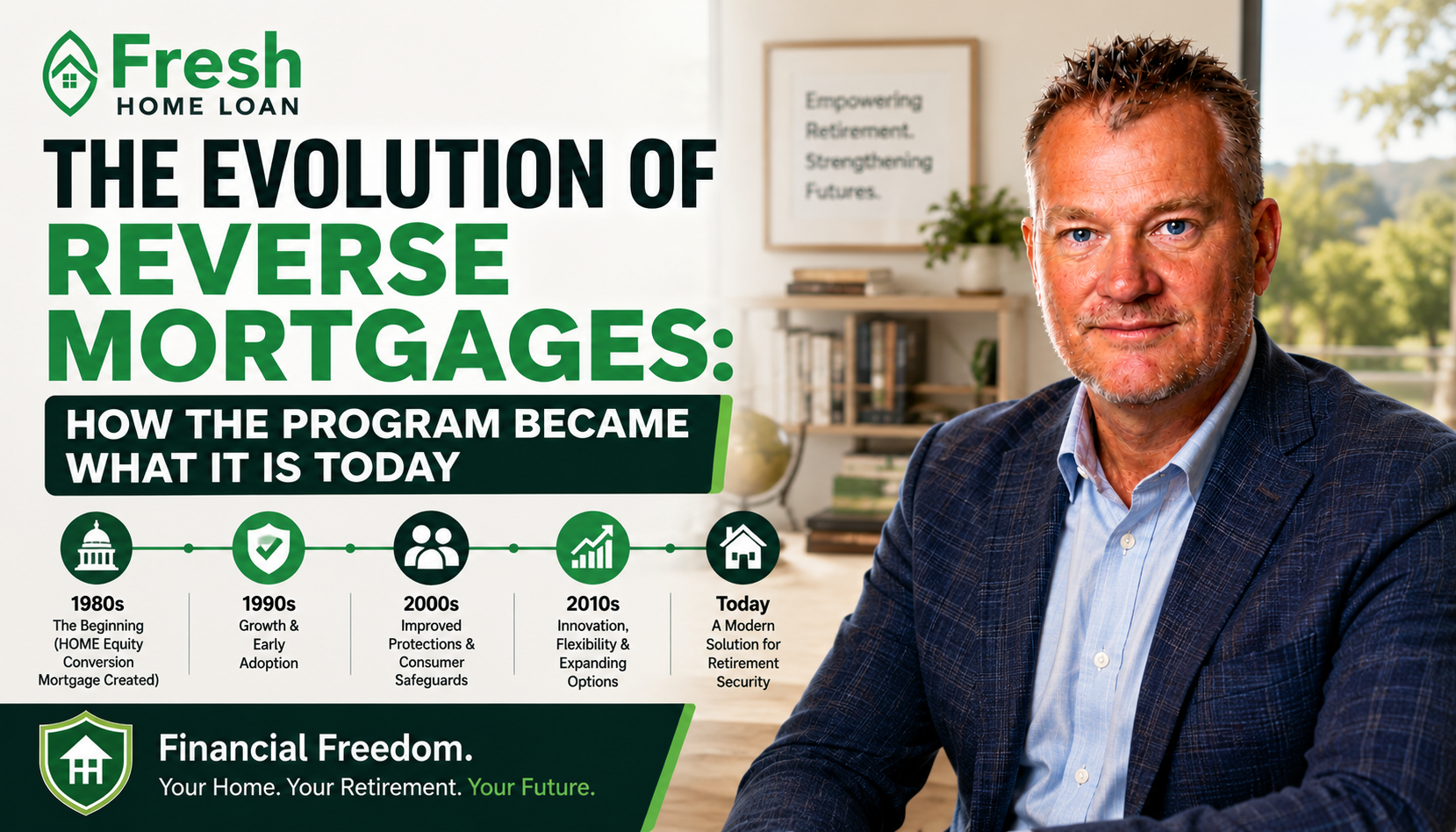
Reverse mortgages may seem like a relatively new financial tool, but the concept has been developing for decades. While traditional mortgages have existed in some form for centuries, the modern reverse mortgage program as we know it today began taking shape in the late 1980s. Over the years, reverse mortgages have evolved through regulatory changes, economic cycles, and consumer demand. Today, they provide eligible homeowners age 62 and older with a way to access a portion of their home equity while continuing to live in their homes. Let's take a look at how reverse mortgages developed and how the program has changed over time. The Birth of the HECM Program The biggest milestone in reverse mortgage history came in 1987 when Congress authorized the Federal Housing Administration (FHA) to insure reverse mortgages through amendments to the Housing and Community Development Act. In 1989, the first FHA-insured Home Equity Conversion Mortgage (HECM) was issued, marking the official launch of the federally backed reverse mortgage program. Initially introduced as a pilot program, the HECM quickly gained attention among lenders and homeowners. The program was designed to help older homeowners convert a portion of their home equity into accessible funds while remaining in their homes. Due to growing demand and positive results, the HECM program was eventually made permanent in 1998 and remains the most widely used reverse mortgage program today. Expanding Opportunities for Homeowners As the program matured, new options were introduced to meet the changing needs of retirees. One of the most significant developments was the introduction of HECM for Purchase. This option allowed eligible homeowners to buy a new primary residence using a reverse mortgage, often reducing or eliminating the need for monthly mortgage payments. The program became especially popular among retirees looking to: Downsize into a smaller home Relocate closer to family Move into a retirement-friendly community Purchase a home better suited for aging in place This expansion transformed reverse mortgages from a retirement income tool into a broader retirement planning strategy. Strengthening Consumer Protections As reverse mortgage volume increased, regulators introduced additional safeguards to protect borrowers. Over the years, the program added: Mandatory independent counseling Financial assessments for borrowers Property charge requirements Enhanced disclosure standards Additional servicing and compliance guidelines These changes were designed to help homeowners better understand the program and ensure they could continue meeting obligations such as property taxes, homeowners' insurance, and home maintenance. Today's reverse mortgage program includes significantly more consumer protections than it did in its early years. The Rise of Proprietary Reverse Mortgages While FHA-insured HECM loans remain the most common reverse mortgage option, private lenders began developing proprietary reverse mortgage programs to serve homeowners with higher-value properties. These "jumbo" reverse mortgages often provide: Higher loan limits Greater access to home equity More flexibility for certain property types Financing solutions for homes that may exceed FHA lending limits Private reverse mortgage programs have continued to evolve, giving homeowners additional choices depending on their goals and property value. Reverse Mortgages in Today's Market Today's reverse mortgage market looks very different from its early beginnings. Modern reverse mortgages are used for a variety of retirement planning strategies, including: Supplementing retirement income Creating a financial safety net Paying off an existing mortgage Funding home improvements Managing healthcare expenses Purchasing a new home As home values have increased over time, many homeowners have accumulated significant equity, making reverse mortgages an important option for those seeking greater financial flexibility in retirement. Looking Ahead The reverse mortgage industry has come a long way since the first FHA-insured HECM loan was issued in 1989. What began as a pilot program has grown into a well-established financial solution backed by extensive regulations, consumer protections, and decades of experience. As retirement needs continue to evolve, reverse mortgages will likely remain an important tool for homeowners looking to leverage the equity they've worked so hard to build. Understanding the history of reverse mortgages helps illustrate how the program has adapted over time—and why it continues to be a valuable option for many retirees today. Schedule a Consultation Contact Fresh Home Loan today to discuss your options with an experienced mortgage professional. https://freshhomeloan.com/schedule-a-meeting/ Garrick Werdmuller President & CEO Fresh Home Loan Inc. 510.282.5456 Call/Text www.FreshHomeLoan.com Follow us on social media: https://www.facebook.com/freshhomeloan/ https://www.instagram.com/garrickwerdmuller/ https://www.linkedin.com/in/garrick-werdmuller-b044253/ https://www.youtube.com/@FreshHomeLoan https://www.tiktok.com/@freshhomeloan #ReverseMortgage #HECM #RetirementPlanning #HomeEquity #SeniorHomeowners #RetirementIncome #MortgageBroker #FinancialPlanning #Homeownership #FreshHomeLoan #RealEstate #FinancialFreedom All loan approvals are conditional and not guaranteed and subject to lender review of all information. Loan is conditionally approved when the lender has issued approval in writing, but until all conditions are met, loan cannot be funded. Specified rates and products may not be available to all borrowers. Rates subject to change according to market conditions and agreed upon lock times set by the borrower. Fresh Home Loan Inc. is an Equal Opportunity Mortgage Broker in California. This licensee is performing acts for which a real estate license is required. Fresh Home Loan, Inc. is licensed by the California Department of Real Estate #02137513 NMLS # 2124104

When you first chose a reverse mortgage, you were likely thinking about your long-term financial goals — creating more flexibility, improving your retirement outlook, or making your home work better for your future. But life changes. Sometimes plans shift, and you may decide that selling your home is the right next step. Selling a home with a reverse mortgage is possible, but the process is a little different than a traditional home sale. Understanding how the loan works, knowing your numbers, and planning ahead can help you avoid surprises and make the transition smoother. Let’s walk through what happens when you sell a home with a reverse mortgage and some important steps to consider before putting your property on the market. Start by Contacting Your Reverse Mortgage Servicer Good communication with your lender is one of the most important first steps. Before listing your home, reach out to your reverse mortgage servicer and request a payoff statement. This will show the current loan balance, including any accrued interest, fees, or other amounts that need to be paid at closing. Knowing your payoff amount helps you determine whether selling makes financial sense and how much equity you may have remaining after the sale. Some homeowners make the mistake of listing their home before understanding their loan balance. Taking time to review your numbers upfront can help you avoid unexpected issues later. Your lender can also let you know if any additional requirements apply, such as an appraisal or documentation related to your sale. Consider Working With a Real Estate Professional While you can sell your home on your own, working with an experienced real estate agent can make the process much easier. A knowledgeable agent can help you: Determine the right listing price Market your home effectively Attract qualified buyers Navigate negotiations Keep the transaction moving forward A strong marketing plan — including professional photos, online exposure, signage, and other strategies — can help your home sell faster and for the best possible price. Get Legal Guidance When Needed Depending on where you live and your specific situation, working with a real estate attorney may be beneficial. An attorney can help explain contracts, review closing documents, and make sure you understand your rights and responsibilities throughout the transaction. They can also help you avoid mistakes that could delay the sale or create unnecessary financial problems. Prepare Your Home Before Listing Before putting your home on the market, take time to make sure it shows well. Simple improvements can make a big difference, such as: Addressing maintenance issues Decluttering and organizing Improving curb appeal Making the home inviting for buyers A well-prepared home can create a better first impression and may help you receive stronger offers. Closing the Sale and Paying Off the Reverse Mortgage Once you accept an offer and complete the closing process, the proceeds from the sale are used to pay off the reverse mortgage balance. The settlement company will typically handle sending the payoff amount to the lender. After the loan balance, closing costs, commissions, and other expenses are paid, any remaining proceeds belong to you. Common Mistakes to Avoid When Selling With a Reverse Mortgage Selling a home with a reverse mortgage does not have to be complicated, but there are a few things homeowners should watch for. Selling Without Knowing Your Numbers Before selling, understand your home’s current value and your outstanding loan balance. If the home value is less than what you owe, you may have limited or no equity available after the sale. Selling Too Soon Selling shortly after getting a reverse mortgage may not always be ideal because upfront costs and fees may impact the amount of equity available. Review your situation carefully before making a decision. Not Having a Clear Plan The biggest mistake homeowners can make is moving forward without understanding the process. Knowing your payoff amount, estimated sale price, expenses, and timeline can help you make a confident decision. Final Thoughts A reverse mortgage does not prevent you from selling your home. Many homeowners sell for different reasons — downsizing, relocating, moving closer to family, or simply changing their financial plans. The key is preparation. By communicating with your lender, understanding your loan balance, and working with experienced professionals, you can make the selling process much smoother and avoid unnecessary stress. A reverse mortgage is designed to give homeowners options — and selling your home can still be one of those options when the time is right. Schedule a Consultation Contact Fresh Home Loan today to discuss your options with an experienced mortgage professional. https://freshhomeloan.com/schedule-a-meeting/ Garrick Werdmuller President & CEO Fresh Home Loan Inc. 510.282.5456 Call/Text www.FreshHomeLoan.com Follow us on social media: https://www.facebook.com/freshhomeloan/ https://www.instagram.com/garrickwerdmuller/ https://www.linkedin.com/in/garrick-werdmuller-b044253/ https://www.youtube.com/@FreshHomeLoan https://www.tiktok.com/@freshhomeloan #ReverseMortgage #HECM #RetirementPlanning #HomeEquity #SeniorHomeowners #RetirementIncome #MortgageBroker #FinancialPlanning #Homeownership #FreshHomeLoan #RealEstate #FinancialFreedom All loan approvals are conditional and not guaranteed and subject to lender review of all information. Loan is conditionally approved when the lender has issued approval in writing, but until all conditions are met, loan cannot be funded. Specified rates and products may not be available to all borrowers. Rates subject to change according to market conditions and agreed upon lock times set by the borrower. Fresh Home Loan Inc. is an Equal Opportunity Mortgage Broker in California. This licensee is performing acts for which a real estate license is required. Fresh Home Loan, Inc. is licensed by the California Department of Real Estate #02137513 NMLS # 2124104

When it comes to financing a home, there is no one-size-fits-all solution. Some homeowners benefit from a traditional mortgage or refinance, while others may find that a reverse mortgage better supports their retirement goals. That's why working with a mortgage broker who understands both traditional and reverse mortgage products can be so valuable. Unlike lenders that specialize in only one type of loan, a full-service mortgage broker can help you evaluate multiple options and determine which solution best fits your financial situation, long-term plans, and homeownership goals. As more borrowers move away from large banks and toward independent mortgage brokers, access to a broader range of loan programs has become increasingly important. Today's homeowners want choices, personalized guidance, and the confidence that they are selecting the right financing strategy—not simply the only option available. Knowledge Creates Better Decisions One of the biggest advantages of working with a mortgage broker who offers both traditional and reverse mortgage solutions is the ability to compare options side by side. For example, a homeowner may initially believe a reverse mortgage is the best solution, only to discover that a traditional refinance, HELOC, or home equity loan better meets their needs. In other situations, a reverse mortgage may provide benefits that traditional financing cannot. Having access to multiple loan programs allows homeowners to evaluate costs, cash flow, long-term impacts, and retirement planning strategies before making a decision. Flexibility When Life Changes Financial goals evolve over time. A homeowner who is focused on lowering monthly payments today may be more interested in accessing home equity during retirement years. A family planning a major renovation may have very different needs than someone looking to eliminate an existing mortgage payment. Working with a broker who understands both traditional and reverse mortgage products provides flexibility as those needs change. Rather than being limited to a single solution, you can explore multiple strategies with one trusted advisor. Save Time and Simplify the Process Researching different lenders for every possible financing option can be time-consuming and frustrating. A broker who offers a comprehensive range of mortgage solutions can help streamline the process by providing guidance, comparing programs, and helping you understand the advantages and disadvantages of each option. Instead of speaking with multiple lenders, repeating your financial information, and gathering competing quotes, you can work with one experienced professional who understands your goals and can help you navigate the available choices. Building a Long-Term Relationship Perhaps the greatest benefit is having a trusted mortgage professional who understands your financial history and goals. Whether you're purchasing a home, refinancing, accessing equity, or planning for retirement, having a knowledgeable advisor who can assist with multiple mortgage solutions can save time and provide peace of mind for years to come. The Bottom Line The best mortgage isn't always the newest product or the one with the lowest rate. It's the solution that aligns with your financial goals. By working with a mortgage broker who offers both traditional and reverse mortgage options, you gain access to more choices, greater flexibility, and guidance designed around your unique situation. Before making any major financing decision, take the time to explore all of your options and work with a professional who can help you evaluate the complete picture. Schedule a Consultation Contact Fresh Home Loan today to discuss your options with an experienced mortgage professional. https://freshhomeloan.com/schedule-a-meeting/ Garrick Werdmuller President & CEO Fresh Home Loan Inc. 510.282.5456 Call/Text www.FreshHomeLoan.com Follow us on social media: https://www.facebook.com/freshhomeloan/ https://www.instagram.com/garrickwerdmuller/ https://www.linkedin.com/in/garrick-werdmuller-b044253/ https://www.youtube.com/@FreshHomeLoan https://www.tiktok.com/@freshhomeloan #ReverseMortgage #HECM #RetirementPlanning #HomeEquity #SeniorHomeowners #RetirementIncome #MortgageBroker #FinancialPlanning #Homeownership #FreshHomeLoan #RealEstate #FinancialFreedom All loan approvals are conditional and not guaranteed and subject to lender review of all information. Loan is conditionally approved when the lender has issued approval in writing, but until all conditions are met, loan cannot be funded. Specified rates and products may not be available to all borrowers. Rates subject to change according to market conditions and agreed upon lock times set by the borrower. Fresh Home Loan Inc. is an Equal Opportunity Mortgage Broker in California. This licensee is performing acts for which a real estate license is required. Fresh Home Loan, Inc. is licensed by the California Department of Real Estate #02137513 NMLS # 2124104

The San Francisco Bay Area is home to some of the most valuable real estate in the country. As home values have risen over the years, many homeowners age 62 and older have accumulated substantial home equity. For these homeowners, a Jumbo Reverse Mortgage—often referred to as a Private Reverse Mortgage—has become an increasingly popular financial planning tool. While jumbo reverse mortgages once had a mixed reputation, today's programs have evolved significantly. Modern private reverse mortgage solutions offer greater flexibility, higher lending limits, and more options for homeowners seeking to access their equity without selling their home. What Is a Jumbo Reverse Mortgage? A Jumbo Reverse Mortgage is a reverse mortgage designed for higher-value homes that exceed the lending limits of traditional FHA-insured Home Equity Conversion Mortgages (HECMs). Because these loans are offered through private lenders rather than being insured by the Federal Housing Administration (FHA), they are not subject to the same loan limits and program restrictions. This flexibility makes them particularly attractive in high-cost housing markets such as the San Francisco Bay Area. Like a traditional reverse mortgage, a jumbo reverse mortgage allows eligible homeowners to convert a portion of their home equity into cash while continuing to live in the home. Borrowers remain responsible for property taxes, homeowner's insurance, and maintaining the property. Why Bay Area Homeowners Are Choosing Jumbo Reverse Mortgages 1. Higher Borrowing Limits One of the biggest advantages of a jumbo reverse mortgage is the ability to access more equity from a high-value property. Many private reverse mortgage programs offer significantly higher lending limits than traditional FHA reverse mortgages, making them ideal for homeowners whose properties have appreciated substantially over time. For homeowners in cities such as San Jose, Fremont, Oakland, Walnut Creek, Pleasanton, Danville, and throughout the Bay Area, this can mean access to a much larger portion of their available equity. 2. No FHA Mortgage Insurance Premium Traditional FHA reverse mortgages include both upfront and ongoing mortgage insurance costs. Many jumbo reverse mortgage programs do not require FHA mortgage insurance premiums, which may reduce overall loan costs depending on the specific program and borrower qualifications. 3. Greater Flexibility Private reverse mortgage programs often provide more flexibility regarding: Loan amounts Eligible property values Distribution options Borrower scenarios Depending on the lender and program, homeowners may be able to receive a larger lump sum at closing or structure the loan in a way that better aligns with their financial goals. 4. Retirement Income Planning Many Bay Area homeowners are "house rich but cash flow conscious." A jumbo reverse mortgage can provide funds that may be used for: Supplementing retirement income Paying off an existing mortgage Covering healthcare expenses Funding home improvements Establishing a financial reserve Delaying withdrawals from retirement accounts For some homeowners, accessing home equity strategically can create additional financial flexibility during retirement. 5. Staying in the Home You Love One of the most appealing aspects of a reverse mortgage is the ability to remain in your home while accessing equity. Rather than downsizing or liquidating investments, eligible homeowners can use a portion of their home equity to support retirement goals while continuing to enjoy the home and community they have built over the years. Important Considerations Not all jumbo reverse mortgage programs are identical. Borrowers should carefully review: Interest rates Fees and closing costs Borrower protections Loan repayment terms Non-recourse provisions Many private reverse mortgage products offer protections similar to traditional reverse mortgages, but these features vary by lender and program. It is important to discuss the details with an experienced mortgage professional before making a decision. Is a Jumbo Reverse Mortgage Right for You? If you own a high-value home in the San Francisco Bay Area and are looking for ways to access your equity without selling your property, a jumbo reverse mortgage may be worth exploring. Every homeowner's financial situation is unique. Understanding your options can help you determine whether a private reverse mortgage fits into your retirement and long-term financial plans. Schedule a Consultation Contact Fresh Home Loan today to discuss your options with an experienced mortgage professional. https://freshhomeloan.com/schedule-a-meeting/ Garrick Werdmuller President & CEO Fresh Home Loan Inc. 510.282.5456 Call/Text www.FreshHomeLoan.com Follow us on social media: https://www.facebook.com/freshhomeloan/ https://www.instagram.com/garrickwerdmuller/ https://www.linkedin.com/in/garrick-werdmuller-b044253/ https://www.youtube.com/@FreshHomeLoan https://www.tiktok.com/@freshhomeloan #ReverseMortgage #HECM #RetirementPlanning #HomeEquity #SeniorHomeowners #RetirementIncome #MortgageBroker #FinancialPlanning #Homeownership #FreshHomeLoan #RealEstate #FinancialFreedom All loan approvals are conditional and not guaranteed and subject to lender review of all information. Loan is conditionally approved when the lender has issued approval in writing, but until all conditions are met, loan cannot be funded. Specified rates and products may not be available to all borrowers. Rates subject to change according to market conditions and agreed upon lock times set by the borrower. Fresh Home Loan Inc. is an Equal Opportunity Mortgage Broker in California. This licensee is performing acts for which a real estate license is required. Fresh Home Loan, Inc. is licensed by the California Department of Real Estate #02137513 NMLS # 2124104

As retirement costs continue to rise and many homeowners sit on substantial home equity, reverse mortgages have become an increasingly important financial planning tool for seniors. While reverse mortgages aren't the right solution for everyone, they can provide flexibility, financial security, and peace of mind when used appropriately. At Fresh Home Loan, we believe education comes first. Whether you're a homeowner exploring retirement options or an adult child helping aging parents evaluate their finances, understanding how reverse mortgages work is essential before making any decisions. What Is a Reverse Mortgage? A reverse mortgage allows eligible homeowners—typically age 62 or older—to convert a portion of their home's equity into cash without selling the property or taking on a traditional monthly mortgage payment. Unlike a conventional mortgage where the borrower makes monthly payments to the lender, a reverse mortgage allows the homeowner to access their equity while continuing to live in the home. The loan balance grows over time and is generally repaid when the homeowner sells the property, permanently moves out, or passes away. The most common reverse mortgage is the Home Equity Conversion Mortgage (HECM), which is insured by the Federal Housing Administration (FHA). Why Reverse Mortgages Are Gaining Popularity Today's retirees face different financial challenges than previous generations: Rising healthcare costs Longer life expectancy Inflation impacting retirement income Increased home values creating substantial equity Desire to age in place rather than relocate For many homeowners, a reverse mortgage provides access to wealth they've built over decades without requiring them to sell their home. Common Ways Homeowners Use Reverse Mortgage Funds Every homeowner's situation is different, but some of the most common uses include: Supplementing Retirement Income Many retirees use reverse mortgage proceeds to help cover everyday living expenses, allowing retirement savings and investment accounts to last longer. Paying Off an Existing Mortgage One of the most popular strategies is eliminating an existing mortgage payment. Removing that monthly obligation can significantly improve cash flow during retirement. Covering Medical Expenses Healthcare costs can quickly become one of the largest retirement expenses. Reverse mortgage proceeds may help cover medical bills, in-home care, or other healthcare-related costs. Home Improvements and Accessibility Upgrades Many seniors use funds to modify their homes with accessibility features such as ramps, walk-in showers, wider doorways, or other improvements that support aging in place. Creating a Financial Safety Net A reverse mortgage line of credit can serve as an emergency reserve, giving homeowners access to funds when unexpected expenses arise. Why Work with a Mortgage Broker for a Reverse Mortgage? Many consumers are surprised to learn that reverse mortgages are available through mortgage brokers—not just companies that exclusively offer reverse mortgage products. Working with an independent mortgage broker offers several advantages: Access to Multiple Lenders A broker can compare programs from multiple lenders rather than offering only one company's products. This can help homeowners find a solution that best fits their goals. Personalized Guidance Reverse mortgages involve important financial decisions. A knowledgeable mortgage broker can explain available options, answer questions, and help evaluate whether a reverse mortgage makes sense for your situation. Competitive Pricing Because brokers have access to multiple lending sources, they can often help borrowers compare rates, fees, and product features. Ongoing Support A broker serves as an advocate throughout the process, helping coordinate documentation, counseling requirements, and lender communication. Where Can You Get a Reverse Mortgage? Homeowners generally have several options when seeking a reverse mortgage: Traditional Banks and Credit Unions Some financial institutions offer reverse mortgage products through their lending divisions. Specialized Reverse Mortgage Companies These lenders focus primarily on reverse mortgage products and often have dedicated teams experienced in senior lending solutions. Independent Mortgage Brokers Mortgage brokers can provide access to multiple lenders and programs while helping borrowers compare options. Online Mortgage Providers Many lenders now offer digital application processes that allow homeowners to complete much of the transaction remotely. Benefits of Reverse Mortgages When used appropriately, reverse mortgages can provide significant advantages. No Required Monthly Mortgage Payment Borrowers are generally not required to make monthly principal and interest payments as long as they continue to meet loan obligations. Stay in Your Home Many homeowners choose a reverse mortgage because it allows them to remain in a home they love while accessing accumulated equity. Flexible Payment Options Funds may be received as: A lump sum Monthly payments A line of credit A combination of these options Tax-Free Proceeds Reverse mortgage proceeds are generally considered loan proceeds rather than taxable income. Homeowners should consult with a qualified tax advisor regarding their specific situation. Non-Recourse Protection HECM reverse mortgages are non-recourse loans, meaning borrowers or their heirs generally will not owe more than the home's value when the loan becomes due. Potential Drawbacks to Consider A reverse mortgage can be a valuable tool, but it is important to understand the potential downsides. Loan Costs Reverse mortgages include fees, interest charges, and, in some cases, mortgage insurance premiums. Reduced Home Equity As funds are borrowed and interest accrues, the remaining equity in the property decreases over time. Ongoing Property Obligations Borrowers must continue to: Pay property taxes Maintain homeowners insurance Keep the property in good condition Occupy the home as their primary residence Failure to meet these obligations may result in default. Estate Planning Considerations A reverse mortgage can impact inheritance plans. Family members should understand how the loan will be handled when the borrower passes away or permanently leaves the home. Long-Term Care Situations If a borrower moves into assisted living or another facility for an extended period, the loan may become due and payable. Questions to Ask Before Getting a Reverse Mortgage Before moving forward, consider these important questions: How long do I plan to stay in my home? What are my retirement income needs? Have I explored other financial options? How will this decision affect my heirs? Am I comfortable maintaining the responsibilities of homeownership? Have I discussed the decision with trusted family members and financial professionals? The Importance of Reverse Mortgage Counseling For FHA-insured HECM loans, independent counseling is required before obtaining the loan. This counseling helps ensure homeowners understand: How reverse mortgages work Available alternatives Loan costs and obligations Potential impacts on their financial future The goal is to help borrowers make informed decisions based on their individual circumstances. The Bottom Line A reverse mortgage is neither inherently good nor bad—it is simply a financial tool. For some homeowners, it can provide retirement security, increased cash flow, and the ability to remain in their homes for years to come. For others, alternative solutions may be more appropriate. The key is understanding all available options and working with experienced professionals who put education first. At Fresh Home Loan, we believe homeowners deserve objective guidance, clear explanations, and personalized solutions. If you're exploring reverse mortgages for yourself or helping a family member evaluate retirement options, our team is here to answer your questions and help you make an informed decision. Schedule a Consultation Want to learn whether a reverse mortgage may be right for your situation? Contact Fresh Home Loan today to discuss your options with an experienced mortgage professional. https://freshhomeloan.com/schedule-a-meeting/ Garrick Werdmuller President & CEO Fresh Home Loan Inc. 510.282.5456 Call/Text NMLS #242952 www.FreshHomeLoan.com You may also enjoy: Jumbo Reverse Mortgages in the Bay Area: Unlocking Home Equity for Retirement https://www.freshhomeloan.com/jumbo-reverse-mortgages-in-the-bay-area-unlocking-home-equity-for-retirement One Broker, More Options: Traditional and Reverse Mortgages Under One Roof https://www.freshhomeloan.com/one-broker-more-options-traditional-and-reverse-mortgages-under-one-roof What Happens When You Sell a Home With a Reverse Mortgage https://www.freshhomeloan.com/what-happens-when-you-sell-a-home-with-a-reverse-mortgage Follow us on social media: https://www.facebook.com/freshhomeloan/ https://www.instagram.com/garrickwerdmuller/ https://www.linkedin.com/in/garrick-werdmuller-b044253/ https://www.youtube.com/@FreshHomeLoan https://www.tiktok.com/@freshhomeloan #ReverseMortgage #HECM #RetirementPlanning #HomeEquity #SeniorHomeowners #RetirementIncome #MortgageBroker #FinancialPlanning #Homeownership #FreshHomeLoan #RealEstate #FinancialFreedom All loan approvals are conditional and not guaranteed and subject to lender review of all information. Loan is conditionally approved when the lender has issued approval in writing, but until all conditions are met, loan cannot be funded. Specified rates and products may not be available to all borrowers. Rates subject to change according to market conditions and agreed upon lock times set by the borrower. Fresh Home Loan Inc. is an Equal Opportunity Mortgage Broker in California. This licensee is performing acts for which a real estate license is required. Fresh Home Loan, Inc. is licensed by the California Department of Real Estate #02137513 NMLS # 2124104

A Home Equity Line of Credit (HELOC) is one of the most flexible ways homeowners can access the equity they have built in their property. Unlike a traditional loan where all funds are received at closing, a HELOC functions as a revolving line of credit secured by your home. Once approved, the lender establishes a maximum credit limit based on your home's value, existing mortgage balance, credit profile, and income. You can then draw funds as needed, up to your approved limit, during what is known as the draw period . For many HELOC programs, the draw period ranges from 3 to 10 years , with 5 years being a common option. During this time, homeowners can borrow, repay, and borrow again, similar to how a credit card works. Many HELOCs offer interest-only payments during the draw period, helping to keep monthly payments lower while funds are being utilized. After the draw period ends, the line typically converts into a repayment period. While terms vary by lender, many HELOCs are structured with a total term of up to 30 years , allowing borrowers time to repay the outstanding balance through principal and interest payments. Understanding Prime Rate One of the most important things to understand about a HELOC is that the interest rate is usually variable , meaning it can move up or down over time. Most HELOCs are tied to the Prime Rate , which is a benchmark interest rate used by banks throughout the United States. When the Federal Reserve raises or lowers short-term interest rates, the Prime Rate often follows. Your HELOC rate is typically expressed as: Prime Rate + Margin For example, if the Prime Rate is 7.50% and your lender offers a margin of 0.50%, your HELOC rate would be 8.00%. Because of this structure, your payment may increase or decrease over time as interest rates change. How Federal Reserve Decisions Affect HELOCs When the Federal Reserve raises rates to combat inflation, HELOC rates generally increase as well. This means homeowners with outstanding HELOC balances may see their monthly payments rise. On the other hand, when the Federal Reserve lowers rates, HELOC rates often decrease, which can reduce borrowing costs and lower monthly payments. This direct connection to Federal Reserve policy is one of the biggest differences between a HELOC and many traditional fixed-rate loans. For homeowners, this can be both an advantage and a consideration. During periods of falling interest rates, HELOC borrowers may benefit from lower payments without refinancing. During periods of rising rates, borrowing costs can increase. Why Many Homeowners Still Choose a HELOC Even with a variable rate, HELOCs remain popular because they offer flexibility that many other financing options cannot match. Homeowners commonly use HELOCs to: Finance home improvement projects Build ADUs or guest units Consolidate higher-interest debt Cover college tuition expenses Fund business opportunities Create an emergency reserve Rather than refinancing an entire first mortgage, homeowners can access only the funds they need while preserving the low-rate mortgage they may already have in place. Final Thoughts I often tell homeowners that a HELOC is more of a financial tool than a traditional loan. It gives you access to your home's equity when opportunities arise, while allowing you to keep your existing first mortgage intact. Understanding how the Prime Rate works and how Federal Reserve decisions impact your borrowing costs can help you determine whether a HELOC is the right solution for your goals. As always, every homeowner's situation is different. The best HELOC strategy depends on your equity position, current mortgage, and long-term financial objectives. To schedule an appointment with Garrick Werdmuller, President and CEO of Fresh Home Loan Inc, visit: https://freshhomeloan.com/schedule-a-meeting/ Garrick Werdmuller President CEO Fresh Home Loan Inc 510.282.5456 call/text NMLS 242952 www.FreshHomeLoan.com You may also enjoy: HELOC vs. HELOAN: Unlocking Your Home's Equity Without Touching Your First Mortgage https://www.freshhomeloan.com/heloc-vs-heloan-unlocking-your-home-s-equity-without-touching-your-first-mortgage HELOC vs Credit Card: Which Is Better for Homeowners? https://www.freshhomeloan.com/heloc-vs-credit-card-which-is-better-for-homeowners Understanding the Difference Between a HELOC and a HELOAN https://www.freshhomeloan.com/understanding-the-difference-between-a-heloc-and-a-heloan Socials: https://www.facebook.com/freshhomeloan/ https://www.instagram.com/garrickwerdmuller/ https://www.linkedin.com/in/garrick-werdmuller-b044253/ https://www.youtube.com/@FreshHomeLoan https://www.tiktok.com/@freshhomeloan #HELOC #HomeEquity #HELOAN #CreditCards #HomeownerTips #MortgageBroker #PersonalFinance #HomeFinancing #FirstTimeHomeBuyer #Realtor #FreshHomeLoan #RealEstate #WealthBuilding #MortgageAdvice #HomeImprovement #FinancialFreedom All loan approvals are conditional and not guaranteed and subject to lender review of all information. Loan is conditionally approved when the lender has issued approval in writing, but until all conditions are met, loan cannot be funded. Specified rates and products may not be available to all borrowers. Rates subject to change according to market conditions and agreed upon lock times set by the borrower. Fresh Home Loan Inc. is an Equal Opportunity Mortgage Broker in California. This licensee is performing acts for which a real estate license is required. Fresh Home Loan, Inc. is licensed by the California Department of Real Estate #02137513 NMLS # 2124104

While both a HELOC and a HELOAN allow homeowners to access the equity they have built in their property without refinancing their existing first mortgage, they are designed for different financial needs. What Is a HELOC? A Home Equity Line of Credit (HELOC) is a revolving line of credit secured by your home's equity. Think of it as being similar to a credit card, but typically with a much lower interest rate because it is backed by your property. Instead of receiving all of the funds at once, you are approved for a maximum credit limit and can draw money as needed during the draw period. This flexibility makes a HELOC particularly attractive for homeowners who have ongoing or uncertain expenses. For example, if you are remodeling a kitchen, building an ADU, paying college tuition over several semesters, or simply want access to funds for future opportunities, a HELOC allows you to borrow only what you need when you need it. In many cases, homeowners pay interest only on the amount they have actually borrowed, not on the entire approved line. A HELOC can also serve as a financial safety net. Many homeowners establish a HELOC and leave it available for emergencies, investment opportunities, or unexpected expenses. Because the funds are accessible when needed, it provides flexibility that a traditional lump-sum loan cannot offer. What Is a HELOAN? A Home Equity Loan (HELOAN) is a traditional second mortgage that provides a one-time lump sum of money upfront. Unlike a HELOC, where funds can be drawn over time, a HELOAN delivers the entire loan amount at closing and is repaid through fixed monthly payments over a set term. Many homeowners prefer a HELOAN when they know exactly how much money they need and want the predictability of a fixed payment. If you're financing a major home improvement project with a defined budget, paying off high-interest debt, purchasing investment property, or funding a large one-time expense, a HELOAN can provide certainty and structure. Because the loan amount, payment, and repayment schedule are established at closing, many borrowers appreciate the simplicity of knowing exactly what they owe each month. There is no need to manage draws or worry about fluctuating balances. For homeowners who prefer a straightforward financing solution, a HELOAN can be an excellent choice. Which Option Is Better? The answer depends on your goals. If you need flexibility, want ongoing access to funds, or expect costs to occur over time, a HELOC may be the better fit. If you know exactly how much money you need and prefer a fixed payment with a defined payoff schedule, a HELOAN may be the stronger option. The good news is that both products can allow homeowners to access their equity while keeping their existing first mortgage intact. For homeowners who locked in historically low mortgage rates, that can be a significant advantage compared to refinancing the entire loan balance at today's market rates. To schedule an appointment with Garrick Werdmuller, President and CEO of Fresh Home Loan Inc, visit: https://freshhomeloan.com/schedule-a-meeting/ Garrick Werdmuller President CEO Fresh Home Loan Inc 510.282.5456 call/text NMLS 242952 www.FreshHomeLoan.com You may also enjoy: HELOC vs. HELOAN: Unlocking Your Home's Equity Without Touching Your First Mortgage https://www.freshhomeloan.com/heloc-vs-heloan-unlocking-your-home-s-equity-without-touching-your-first-mortgage HELOC vs Credit Card: Which Is Better for Homeowners? https://www.freshhomeloan.com/heloc-vs-credit-card-which-is-better-for-homeowners How Does a HELOC Work? https://www.freshhomeloan.com/how-does-a-heloc-work Socials: https://www.facebook.com/freshhomeloan/ https://www.instagram.com/garrickwerdmuller/ https://www.linkedin.com/in/garrick-werdmuller-b044253/ https://www.youtube.com/@FreshHomeLoan https://www.tiktok.com/@freshhomeloan #HELOC #HomeEquity #HELOAN #CreditCards #HomeownerTips #MortgageBroker #PersonalFinance #HomeFinancing #FirstTimeHomeBuyer #Realtor #FreshHomeLoan #RealEstate #WealthBuilding #MortgageAdvice #HomeImprovement #FinancialFreedom All loan approvals are conditional and not guaranteed and subject to lender review of all information. Loan is conditionally approved when the lender has issued approval in writing, but until all conditions are met, loan cannot be funded. Specified rates and products may not be available to all borrowers. Rates subject to change according to market conditions and agreed upon lock times set by the borrower. Fresh Home Loan Inc. is an Equal Opportunity Mortgage Broker in California. This licensee is performing acts for which a real estate license is required. Fresh Home Loan, Inc. is licensed by the California Department of Real Estate #02137513 NMLS # 2124104

When homeowners need access to cash, one of the most common questions is: "Should I use a HELOC or just put it on a credit card?" The answer depends on your goals, but for larger expenses, a HELOC can often provide significant advantages over traditional credit cards. Let's take a closer look. What Do HELOCs and Credit Cards Have in Common? At first glance, a HELOC and a credit card are surprisingly similar. Both: Provide revolving access to funds Allow you to borrow as needed Require minimum monthly payments Charge interest on outstanding balances Can be reused as balances are repaid The major difference is what secures the debt. A credit card is unsecured debt. A HELOC is secured by the equity in your home. Because the lender has collateral backing the loan, HELOC interest rates are often substantially lower than credit card rates. The Interest Rate Difference Today's credit card rates commonly range from the high teens into the 20%+ range, depending on the card and borrower. Meanwhile, HELOC rates are typically tied to Prime Rate and often come in significantly lower. Let's look at a simple example: $50,000 balance: Credit Card at 24% interest HELOC at 8% interest The difference in interest expense can be thousands of dollars per year. For homeowners carrying substantial credit card balances, this is one reason debt consolidation remains one of the most common uses for a HELOC. Monthly Payment Flexibility Like credit cards, many HELOCs offer flexible payment options during the draw period. Borrowers often have the ability to: Make minimum payments Pay additional principal Pay down and reuse available credit This flexibility can be extremely useful for homeowners managing large projects or expenses over time. When a Credit Card May Make More Sense Credit cards aren't always the bad guy. For smaller purchases that can be paid off quickly, a credit card may be the better option. Examples include: Travel expenses Everyday purchases Business expenses paid off monthly Rewards and cashback opportunities If you pay the balance in full every month, a credit card can provide convenience and rewards without accumulating interest charges. When a HELOC May Make More Sense A HELOC often shines when the expense is larger or spread over time. Examples include: Home Improvements Kitchen remodels, bathrooms, roofing, windows, landscaping, and major renovations. ADU Construction Many California homeowners use HELOCs to help fund garage conversions, detached units, and income-producing ADUs. Debt Consolidation Replacing multiple high-interest credit card payments with a single lower-interest payment. Emergency Reserves Some homeowners establish a HELOC before they need it, creating access to funds for future opportunities or unexpected expenses. The Risk Factor There is an important distinction to remember. Credit card debt is unsecured. A HELOC is secured by your home. That means homeowners should approach a HELOC strategically and responsibly. The goal is not simply to move debt around. The goal is to use home equity to improve your financial position, increase property value, or accomplish meaningful financial objectives. Which Is Better? For short-term spending that is paid off quickly, a credit card may be perfectly appropriate. For larger expenses, home improvements, ADUs, or consolidating high-interest debt, a HELOC often provides a lower-cost financing solution. Many homeowners are surprised to learn they can access equity while keeping their existing first mortgage untouched. Final Thoughts from Garrick I don't view a HELOC and a credit card as competitors as much as different tools for different jobs. If you're putting groceries, gas, or a weekend getaway on a credit card and paying it off every month, that's one thing. Get the points!!! If you're financing a $40,000 kitchen remodel, building an ADU, or carrying high-interest revolving debt, it may be worth exploring whether a HELOC can accomplish the same goal at a significantly lower borrowing cost. The key is understanding your options and choosing the right tool for the job. To schedule an appointment with Garrick Weredmuller, President and CEO of Fresh Home Loan Inc, visit: https://freshhomeloan.com/schedule-a-meeting/ Garrick Werdmuller President CEO Fresh Home Loan Inc 510.282.5456 call/text NMLS 242952 www.FreshHomeLoan.com You may also enjoy: HELOC vs. HELOAN: Unlocking Your Home's Equity Without Touching Your First Mortgage https://www.freshhomeloan.com/heloc-vs-heloan-unlocking-your-home-s-equity-without-touching-your-first-mortgage Understanding the Difference Between a HELOC and a HELOAN https://www.freshhomeloan.com/understanding-the-difference-between-a-heloc-and-a-heloan How Does a HELOC Work? https://www.freshhomeloan.com/how-does-a-heloc-work Socials: https://www.facebook.com/freshhomeloan/ https://www.instagram.com/garrickwerdmuller/ https://www.linkedin.com/in/garrick-werdmuller-b044253/ https://www.youtube.com/@FreshHomeLoan https://www.tiktok.com/@freshhomeloan #HELOC #HomeEquity #CreditCards #HomeownerTips #MortgageBroker #PersonalFinance #HomeFinancing #FirstTimeHomeBuyer #Realtor #FreshHomeLoan #RealEstate #WealthBuilding #MortgageAdvice #HomeImprovement #FinancialFreedom All loan approvals are conditional and not guaranteed and subject to lender review of all information. Loan is conditionally approved when the lender has issued approval in writing, but until all conditions are met, loan cannot be funded. Specified rates and products may not be available to all borrowers. Rates subject to change according to market conditions and agreed upon lock times set by the borrower. Fresh Home Loan Inc. is an Equal Opportunity Mortgage Broker in California. This licensee is performing acts for which a real estate license is required. Fresh Home Loan, Inc. is licensed by the California Department of Real Estate #02137513 NMLS # 2124104

With many homeowners sitting on low first mortgage interest rates from the past several years, one question comes up again and again: "Do I really want to refinance my entire mortgage just to access cash?" In many cases, the answer is no. That's where a HELOC (Home Equity Line of Credit) or HELOAN (Home Equity Loan) can be a powerful solution. How Does a HELOC or HELOAN Work? A HELOC or HELOAN is a second mortgage that sits behind your existing first mortgage. The important thing to understand is: Your First Mortgage Does Not Change If you currently have a mortgage at 3%, 4%, or 5%, that loan remains exactly the same. Your: Interest rate stays the same Payment stays the same Loan term stays the same The HELOC or HELOAN is simply added behind the first mortgage, allowing you to access a portion of your home's available equity. Instead of refinancing your entire loan balance, you're only borrowing the additional funds you need. HELOC vs. HELOAN: What's the Difference? HELOC (Home Equity Line of Credit) A HELOC works similarly to a credit line or credit card. You are approved for a maximum amount and can draw funds as needed. Benefits include: Flexible access to funds Borrow only what you need Interest is generally charged only on the amount used Great for projects completed over time HELOAN (Home Equity Loan) A HELOAN provides a lump sum of money upfront. Benefits include: Fixed loan amount Predictable monthly payments Ideal for one-time expenses Easier budgeting Common Uses for a HELOC or HELOAN 1. Home Improvements One of the most popular uses for home equity financing is improving the home you already own. Examples include: Kitchen remodels Bathroom renovations Roof replacement New windows Flooring upgrades Landscaping Many homeowners use equity to improve their home's comfort, functionality, and value while keeping their low first mortgage rate intact. 2. Building an ADU (Accessory Dwelling Unit) ADUs continue to grow in popularity throughout California. Homeowners are using HELOCs and HELOANs to finance: Detached backyard units Garage conversions In-law suites Rental units An ADU can create: Additional rental income Housing for family members Increased property value Using home equity is often one of the most affordable ways to fund construction costs. 3. Debt Consolidation Many homeowners carry higher-interest debt such as: Credit cards Personal loans Medical bills Other consumer debt A HELOC or HELOAN may allow those balances to be consolidated into a single monthly payment. Potential benefits include: Lower monthly payments Simplified finances Reduced overall interest costs Improved cash flow Every situation is different, but for many homeowners this can be a valuable financial strategy. Is a HELOC or HELOAN Right for You? If you have built equity in your home and want access to cash without disturbing your existing first mortgage, a HELOC or HELOAN may be worth exploring. Whether you're planning a remodel, building an ADU, consolidating debt, or simply creating financial flexibility, there are more options available today than many homeowners realize. At Fresh Home Loan, we can review your current mortgage, available equity, and goals to help determine which option makes the most sense for your situation. Final Thoughts… One of the biggest misconceptions I hear is that homeowners think they need to refinance their entire mortgage to access equity. In reality, many homeowners can keep their current low-rate first mortgage exactly where it is and add a HELOC or HELOAN behind it. If you have questions about your home's equity or would like to explore your options, let's talk. We serve homeowners throughout the Bay Area, Central California, and beyond. To schedule an appointment with Garrick Werdmuller, President and CEO of Fresh Home Loan Inc, visit: https://freshhomeloan.com/schedule-a-meeting/ Garrick Werdmuller President CEO Fresh Home Loan Inc 510.282.5456 call/text NMLS 242952 www.FreshHomeLoan.com You may also enjoy: HELOC vs Credit Card: Which Is Better for Homeowners? https://www.freshhomeloan.com/heloc-vs-credit-card-which-is-better-for-homeowners Understanding the Difference Between a HELOC and a HELOAN https://www.freshhomeloan.com/understanding-the-difference-between-a-heloc-and-a-heloan How Does a HELOC Work? https://www.freshhomeloan.com/how-does-a-heloc-work Socials: https://www.facebook.com/freshhomeloan/ https://www.instagram.com/garrickwerdmuller/ https://www.linkedin.com/in/garrick-werdmuller-b044253/ https://www.youtube.com/@FreshHomeLoan https://www.tiktok.com/@freshhomeloan #HELOC #HomeEquity #HELOAN #CreditCards #HomeownerTips #MortgageBroker #PersonalFinance #HomeFinancing #FirstTimeHomeBuyer #Realtor #FreshHomeLoan #RealEstate #WealthBuilding #MortgageAdvice #HomeImprovement #FinancialFreedom All loan approvals are conditional and not guaranteed and subject to lender review of all information. Loan is conditionally approved when the lender has issued approval in writing, but until all conditions are met, loan cannot be funded. Specified rates and products may not be available to all borrowers. Rates subject to change according to market conditions and agreed upon lock times set by the borrower. Fresh Home Loan Inc. is an Equal Opportunity Mortgage Broker in California. This licensee is performing acts for which a real estate license is required. Fresh Home Loan, Inc. is licensed by the California Department of Real Estate #02137513 NMLS # 2124104

We have pulled a handful of dual credit reports now showing not one but two Credit Reporting System for Mortgage Loan approval. Vantage, which is a new credit scoring model, is supposed to have better scores and unique opportunities for improvement. Thus far, in our reports, we have seen very similar scores. So what is the difference? FICO vs. VantageScore Explained When applying for a mortgage, your credit score can directly impact your loan approval, interest rate, and monthly payment. Most borrowers are familiar with FICO®, but another scoring model is becoming more important in the mortgage world: VantageScore® 4.0 . With lenders like UWM now offering VantageScore® 4.0 as an alternative option for conventional loans, borrowers may have more opportunities to qualify — and even secure better pricing. Here’s a simple breakdown of the difference between FICO® and VantageScore® 4.0 and why it matters. What Is a FICO® Score? A FICO® Score is a numerical representation of a borrower’s creditworthiness. It was developed by Fair Isaac Corporation and has become the most widely used credit scoring model in the mortgage industry. Mortgage lenders use FICO scores to help determine how likely a borrower is to repay a loan on time. Your FICO score plays a major role in: Whether you qualify for a mortgage The interest rate you receive Your monthly payment The type of loan programs available to you In general, a higher FICO score can lead to better loan terms, lower interest rates, and lower overall borrowing costs. How FICO Scores Are Calculated FICO scores are calculated using information from your credit report. The scoring model looks at several categories of financial behavior to predict lending risk. Payment History (35%) 1. Payment History (35%) This is the most important factor in your FICO score. Lenders want to see a strong history of paying obligations on time, including: Credit cards Auto loans Student loans Mortgages Personal loans Late payments, collections, charge-offs, bankruptcies, and foreclosures can negatively impact your score. Even one missed payment can lower a score significantly depending on your overall credit profile. 2. Amounts Owed (30%) This category evaluates how much debt you currently carry compared to your available credit. A major component is your credit utilization ratio , which measures how much of your revolving credit is being used. Example: Credit card limit: $10,000 Current balance: $3,000 Utilization: 30% Lower utilization is generally viewed more favorably by lenders. Many mortgage professionals recommend keeping utilization below 30%, and ideally under 10% for optimal scoring. 3. Length of Credit History (15%) FICO considers: How long your accounts have been open The age of your oldest account The average age of all accounts Longer credit histories generally help scores because they provide more data showing consistent repayment behavior. This is one reason why closing old credit cards can sometimes hurt a score. 4. Credit Mix (10%) FICO rewards borrowers who can responsibly manage different types of credit, such as: Revolving accounts (credit cards) Installment loans (auto loans, mortgages, student loans) A healthy mix demonstrates experience handling multiple forms of debt. 5. New Credit Inquiries (10%) When you apply for new credit, lenders may perform a “hard inquiry” on your credit report. Too many new inquiries within a short period can indicate increased lending risk and may temporarily lower your score. Examples include: Applying for multiple credit cards Financing furniture or electronics Opening several new accounts quickly However, mortgage rate shopping within a short time window is generally treated as a single inquiry by the FICO model. FICO Scores and Mortgage Lending FICO has long been considered the industry standard for mortgage lending. Most conventional mortgage lenders rely heavily on FICO scores when evaluating borrowers. Mortgage lenders may use specialized mortgage versions of FICO scores pulled from the three major credit bureaus: Experian Equifax TransUnion The lender often uses the middle score of the three reports when qualifying a borrower. General Mortgage Score Ranges While guidelines vary by program and lender, common benchmarks include: 740+ → Excellent credit 700–739 → Very good credit 660–699 → Good credit 620–659 → Fair credit Below 620 → More limited financing options Some government-backed and alternative loan programs may allow lower scores, though pricing and qualification standards can change significantly. Why FICO Scores Matter Your FICO score affects more than just loan approval. It can impact: Interest rates Mortgage insurance costs Down payment requirements Loan program eligibility Overall purchasing power For example, a borrower with a higher score may qualify for: Lower monthly payments Better debt-to-income flexibility More competitive loan options Reduced long-term interest costs Even a modest score improvement before applying for a mortgage can potentially save thousands of dollars over the life of a loan. What Is VantageScore® 4.0? VantageScore® 4.0 is a modern credit scoring model designed to provide a broader and more up-to-date evaluation of a consumer’s credit behavior and overall financial habits. It was jointly created by the three major credit bureaus: Experian Equifax TransUnion The goal of VantageScore® was to create a more predictive and inclusive scoring system that could evaluate borrowers using newer forms of data and more advanced analytics than many traditional credit models. While FICO has historically dominated mortgage lending, VantageScore has become increasingly important across the broader lending industry, especially for: Credit cards Auto loans Personal loans Consumer finance platforms Credit monitoring services VantageScore® 4.0 specifically introduced major updates designed to better reflect how consumers manage credit in today’s economy. How VantageScore® 4.0 Works Like traditional scoring models, VantageScore analyzes information from a consumer’s credit report to predict lending risk. However, it uses newer modeling techniques and expanded data analysis to evaluate borrower behavior. One of the major goals of VantageScore® 4.0 was to score more consumers accurately — including borrowers with limited or non-traditional credit histories. Key Features of VantageScore® 4.0 1. Trended Credit Data One of the biggest differences between VantageScore® 4.0 and older models is the use of trended credit data. Instead of looking at only a snapshot of your balances today, the model analyzes patterns over time, including: Whether balances are increasing or decreasing Payment behavior trends Long-term credit management habits Example: Two borrowers may both owe $5,000 on credit cards today: Borrower A is consistently paying balances down Borrower B is steadily increasing debt month after month Older scoring models may treat them similarly, while VantageScore® 4.0 may view Borrower A more favorably due to healthier trends. This creates a more dynamic picture of financial responsibility. 2. Broader Consumer Inclusion VantageScore® 4.0 was designed to score consumers who may not qualify for traditional scoring models. Historically, some borrowers were considered “unscoreable” due to: Limited credit history Few open accounts Infrequent credit usage VantageScore can often generate a score with a shorter credit history than older systems require. This may benefit: Younger borrowers First-time homebuyers Consumers rebuilding credit Individuals who use less traditional credit 3. Machine Learning and Modern Analytics VantageScore® 4.0 uses more advanced statistical modeling and machine learning techniques to identify patterns in repayment behavior. The model was designed to improve: Predictive accuracy Consistency between bureaus Risk evaluation across different borrower profiles This allows lenders to potentially assess credit risk more precisely than older scoring systems built decades ago. 4. Treatment of Collections VantageScore® 4.0 also updated how collection accounts are handled. Some medical collections and paid collections may have a reduced impact compared to older models. The scoring system attempts to distinguish between: Temporary financial hardship Ongoing high-risk credit behavior This can help create a more balanced picture of a borrower’s financial situation. What Factors Affect a VantageScore® 4.0 Score? While the exact formulas are proprietary, VantageScore identifies several major scoring categories: Payment History Your track record of making payments on time remains the single most important factor. Age and Type of Credit The length of your credit history and your mix of account types matter. Credit Utilization How much revolving debt you carry relative to your available limits. Total Balances and Debt The overall amount of debt you owe. Recent Credit Behavior New accounts and recent inquiries can affect your score. Available Credit Having access to unused credit can positively influence scoring. VantageScore vs. FICO Although both models evaluate credit risk, they approach scoring differently. FICO Long-established mortgage industry standard Used heavily in conventional mortgage underwriting Relies more on traditional credit evaluation methods VantageScore® 4.0 Newer and more analytics-driven Uses trended credit data Can score more consumers with limited history Commonly used by credit monitoring apps and consumer lenders Many consumers actually see VantageScores through free credit apps and websites, even though mortgage lenders may still use specialized FICO mortgage scores during underwriting. Why VantageScore® 4.0 Matters As lending technology evolves, many in the financial industry believe newer scoring models like VantageScore® 4.0 may play a larger role in future mortgage and consumer lending decisions. The model was built to reflect modern borrowing behavior and provide a more complete picture of financial responsibility — especially for consumers who may have been overlooked by older scoring systems. For borrowers, understanding VantageScore can help explain why: Credit scores vary between platforms A score seen online may differ from a mortgage lender’s score Different lenders may evaluate risk differently Ultimately, both FICO and VantageScore are tools lenders use to assess risk — but neither tells the full story by itself. Income, assets, debt ratios, reserves, employment history, and overall loan structure still play major roles in mortgage approval decisions. Major Differences Between FICO® and VantageScore® 4.0 1. Trending Credit Data One of the biggest advantages of VantageScore® 4.0 is its use of trending data. Instead of looking only at your current balances, it also evaluates whether your debt is: Increasing over time Staying consistent Decreasing responsibly This gives lenders a more complete picture of how borrowers manage debt over time. 2. Less Credit History Needed FICO typically requires a longer established credit history before generating a score. VantageScore® 4.0 can generate a score with as little as one month of credit history . This can help: First-time homebuyers Younger borrowers Individuals rebuilding credit Borrowers new to the U.S. credit system 3. Alternative Data Usage VantageScore® 4.0 can incorporate alternative payment history such as: Rent payments Utility bills Phone bills This allows borrowers who may not use traditional credit cards heavily to still demonstrate responsible financial behavior. How This Helps Mortgage Borrowers Lenders using VantageScore® 4.0 may be able to approve borrowers who previously struggled to qualify under older scoring models. In some cases, borrowers who already qualify using FICO® could still benefit if their VantageScore® is higher. That’s because a stronger score may improve pricing adjustments and potentially reduce loan costs. For mortgage professionals and borrowers alike, this creates additional flexibility when exploring financing options. Why This Matters in Today’s Market As affordability continues to challenge buyers, every advantage matters. A scoring model that looks at: Positive payment trends Rent history Limited credit profiles can help more borrowers become homeowners. The mortgage industry continues evolving, and understanding both FICO® and VantageScore® 4.0 can help buyers make more informed financial decisions. Final Thoughts from Garrick It is encouraging to see newer credit scoring models like VantageScore® entering the conversation alongside traditional FICO models. For years, FICO has essentially been the standard in mortgage lending, and while it has worked well in many ways, having alternatives can create more flexibility and potentially more opportunity for consumers. I believe it is important for the lending industry to continue evolving — especially as the cost of credit reporting and credit data has increased significantly in recent years. Consumers are paying more for access to financing, and lenders are also facing rising costs tied to credit reports, scoring models, and underwriting systems. More competition and innovation in credit scoring could help encourage a fairer and more efficient system over time. Another important factor is that financial behavior has changed dramatically over the years. Today’s borrowers may manage money differently than previous generations: Some rely less on traditional credit cards Some pay digitally and use alternative financial tools Some are self-employed or have non-traditional income Some are younger buyers with limited but responsible credit histories Modern scoring systems that can evaluate broader financial behavior may help provide a more complete picture of a borrower’s actual risk profile. At the same time, no credit score tells the entire story. As an independent mortgage broker, I have seen many situations where a borrower’s overall financial strength goes far beyond a single number on a credit report. Income stability, reserves, down payment, loan structure, and long-term financial goals all matter. That is why having access to multiple lenders and loan programs is so important. Different lenders may interpret risk differently, and sometimes the right strategy is not just about chasing the highest score — it is about finding the right mortgage solution for the borrower’s full financial picture. The mortgage industry continues to evolve, and expanded scoring options may ultimately help create more pathways to responsible homeownership for qualified buyers. C ontact us here: https://www.freshhomeloan.com/contact-us All loan approvals are conditional and subject to lender review of all information. Loan is considered approved only when issued in writing and all conditions have been satisfied. Rates and products may not be available to all borrowers and are subject to change based on market conditions and lock terms. Fresh Home Loan Inc. is an Equal Opportunity Mortgage Broker in California. This licensee performs acts requiring a real estate license. Fresh Home Loan, Inc. is licensed by the California Department of Real Estate #02137513 | NMLS #2124104. #FICO #VantageScore #MortgageTips #HomeLoans #FirstTimeHomeBuyer #RealEstate #MortgageBroker #ConventionalLoan #CreditScore #HomeBuying #FreshHomeLoan #Realtor #FirstTimeHomebuyer

There is a BATTLE in the Wholesale Mortgage World between Rocket Mortgage and UWM (United Wholesale Mortgage) that started back in 2021. UWM announced the “All IN” policy claiming Rocket and others were “Wholetail Lenders” and would try to take the clients closed by mortgage brokers. I can say that happened to me when Rocket was Quicken Loans back in 2011 or so. I was furious. Moving on… The big story in the mortgage industry right now involving Rocket Mortgage and UWM over mortgage servicing rights (MSRs), refinance targeting, and borrower retention. This lawsuit could have major implications for: • Who “owns” the client relationship • AI-driven refinance marketing • Mortgage servicing economics • The future of broker vs retail lending

No, generalmente no se puede hacer un FHA Streamline Refinance hacia una hipoteca ARM de 5 años. Así es como realmente funciona. Conceptos Básicos del FHA Streamline Refinance El FHA Streamline Refinance está diseñado para ser un proceso simple y con poca documentación, pero tiene limitaciones estrictas: Debes tener actualmente un préstamo FHA Proceso de aprobación limitado (en muchos casos no se requiere verificación de ingresos) Generalmente no requiere avalúo Debe demostrar un “beneficio tangible neto” (como un pago más bajo o un préstamo más estable) ARM vs Tasa Fija en un FHA Streamline Las reglas del FHA Streamline normalmente permiten: Cambiar de ARM → Tasa fija Generalmente NO permiten cambiar de tasa fija → ARM FHA normalmente NO permite nuevos términos ARM en refinanciamientos streamline hoy en día (especialmente ARM 5/1) Incluso cuando las hipotecas ARM eran más comunes en programas FHA: Estaban fuertemente restringidas Y actualmente la mayoría de los prestamistas ni siquiera ofrecen préstamos FHA ARM, especialmente en streamlines ¿Por Qué FHA No Favorece las ARM en los Streamlines? El propósito principal del FHA Streamline es: Reducir el riesgo y mejorar la estabilidad del prestatario Una ARM de 5 años: Introduce incertidumbre futura en la tasa de interés No siempre cumple con el requisito de “beneficio tangible neto” Puede aumentar el riesgo a largo plazo Por eso FHA mantiene estas opciones de manera conservadora. La Estrategia Correcta Importa Al final del día, no se trata solo del tipo de préstamo, sino de cómo ese préstamo encaja con tu estrategia financiera. Ahí es donde trabajar con un mortgage broker independiente hace la diferencia. En lugar de forzar una situación dentro de un solo programa, analizamos múltiples opciones para estructurar la mejor solución según tus metas, ya sea estabilidad, flexibilidad o ambas. Si quieres saber cuál estrategia tiene más sentido para ti, contáctanos aquí: https://www.freshhomeloan.com/contact-us También Te Puede Interesar: FHA Streamline Refinance: Qué es y cómo puede bajar tu pago sin empezar de cero https://www.freshhomeloan.com/fha-streamline-refinance-que-es-y-como-puede-bajar-tu-pago-sin-empezar-de-cero FHA Streamline Refinance: La Guía Completa de Preguntas Frecuentes para Propietarios https://www.freshhomeloan.com/fha-streamline-refinance-la-guia-completa-de-preguntas-frecuentes-para-propietarios Cuatro Datos Clave Sobre el FHA Streamline Refinance https://www.freshhomeloan.com/cuatro-datos-clave-sobre-el-fha-streamline-refinance Lo Que el FHA Streamline Refinance NO Hace https://www.freshhomeloan.com/lo-que-el-fha-streamline-refinance-no-hace Todos los préstamos están sujetos a aprobación y revisión final por parte del prestamista. Un préstamo se considera aprobado únicamente cuando la aprobación es emitida por escrito y se cumplen todas las condiciones. Las tasas y productos pueden no estar disponibles para todos los prestatarios y están sujetos a cambios según las condiciones del mercado y el plazo de bloqueo de tasa. Fresh Home Loan Inc. es un Mortgage Broker con igualdad de oportunidades en California. Esta compañía realiza actos que requieren una licencia de bienes raíces. Fresh Home Loan, Inc. está licenciada por el Departamento de Bienes Raíces de California #02137513 | NMLS #2124104. #FHAStreamline #Refinanciamiento #Hipotecas #MortgageBroker #FreshHomeLoan #BienesRaices #CompradoresDeCasa #PrimerComprador #RealEstate #CaliforniaRealEstate #BayAreaHomes #BakersfieldRealEstate #ConsejosHipotecarios #FreshHomeLoan

No, you generally cannot do an FHA Streamline Refinance into a 5-year ARM. Here’s how it actually works. FHA Streamline Refinance Basics An FHA Streamline is designed to be simple and low-doc , but it comes with strict limitations : Must already have an FHA loan Limited underwriting (no income verification in many cases) No appraisal required (in most cases) Must show a “net tangible benefit” (lower payment or more stable loan) ARM vs Fixed on FHA Streamline FHA Streamline rules: You can go ARM → Fixed You generally cannot go Fixed → ARM FHA does NOT typically allow new ARM terms on streamline refinances today (especially 5/1 ARMs) Even when ARMs were more common in FHA: They were tightly restricted And today, most lenders don’t offer FHA ARMs at all , especially on streamlines Why FHA Doesn’t Like ARMs on Streamlines The whole purpose of the streamline is: Reduce risk + improve borrower stability A 5-year ARM: Introduces future rate uncertainty Doesn’t always meet the “net tangible benefit” test Can increase long-term risk FHA keeps it conservative. At the end of the day, it’s not just about the loan type—it’s about how the loan fits your strategy . That’s where working with an independent mortgage broker makes the difference. Instead of forcing a scenario into one program, we look across multiple options to structure the right solution for your goals—whether that’s stability, flexibility, or both. 📲 If you’re wondering what strategy makes the most sense for you, let’s map it out: https://www.freshhomeloan.com/contact-us You may also enjoy: FHA Streamline Refinance: What It Is and How It Can Lower Your Payment Without Starting Over https://www.freshhomeloan.com/fha-streamline-refinance-what-it-is-and-how-it-can-lower-your-payment-without-starting-over FHA Streamline Refinance: The Complete FAQ Guide for Homeowners https://www.freshhomeloan.com/fha-streamline-refinance-the-complete-faq-guide-for-homeowners Four Facts About FHA Streamline Refinance Loans https://www.freshhomeloan.com/four-facts-about-fha-streamline-refinance-loans What FHA Streamline Refinance Does NOT Do https://www.freshhomeloan.com/what-fha-streamline-refinance-does-not-do All loan approvals are conditional and subject to lender review of all information. Loan is considered approved only when issued in writing and all conditions have been satisfied. Rates and products may not be available to all borrowers and are subject to change based on market conditions and lock terms. Fresh Home Loan Inc. is an Equal Opportunity Mortgage Broker in California. This licensee performs acts requiring a real estate license. Fresh Home Loan, Inc. is licensed by the California Department of Real Estate #02137513 | NMLS #2124104. #FHAStreamline #MortgageTips #Refinance #Homeowners #LowerYourPayment #RealEstateAdvice #CaliforniaRealEstate #FirstTimeHomeBuyer #BakersfieldRealEstate #BayAreaHomes #MortgageBroker #FreshHomeLoan
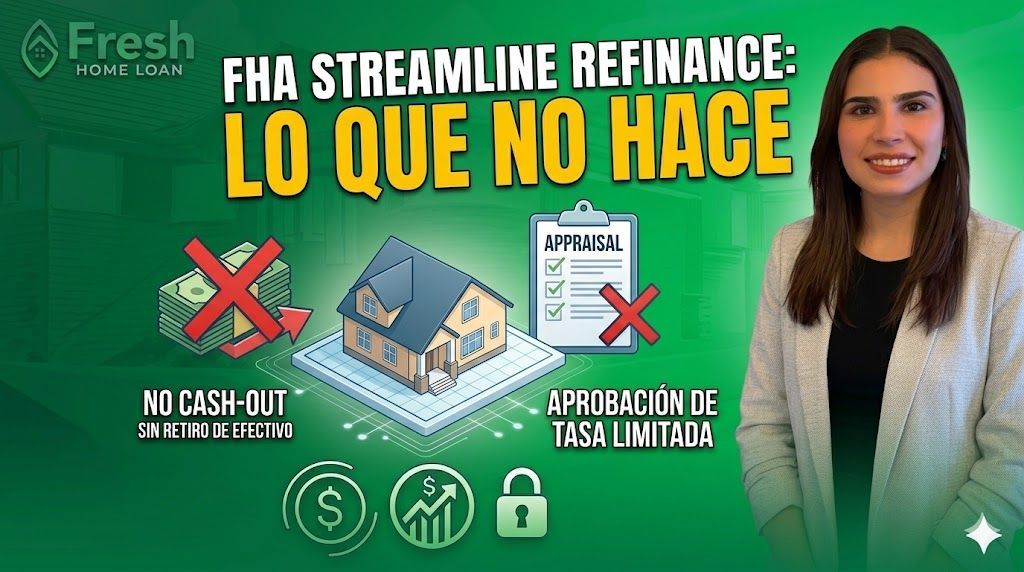
Antes de avanzar con un FHA Streamline Refinance, es igual de importante entender lo que este programa no hace. Aquí es donde existe mucha confusión. No Permite Sacar Efectivo (“Cash-Out”) El FHA Streamline no está diseñado para sacar capital acumulado de tu propiedad. Está diseñado únicamente para: • Mejorar tu préstamo actual • No para acceder a dinero en efectivo Si estás buscando consolidar deudas, remodelar tu casa o retirar efectivo, necesitarás otro tipo de refinanciamiento. NO Elimina el Mortgage Insurance (MIP) Este es uno de los conceptos más malentendidos. Tu préstamo FHA seguirá incluyendo: • Upfront Mortgage Insurance Premium (UFMIP) • Monthly Mortgage Insurance (MIP) Sin embargo, tu pago total todavía puede disminuir con una mejor tasa o una mejor estructura del préstamo. No Está Disponible Para Préstamos Que No Sean FHA Este programa únicamente está disponible para propietarios que actualmente tienen un préstamo FHA. Si tienes un préstamo convencional, VA u otro tipo de financiamiento, esta opción no aplicará, aunque podrían existir mejores alternativas para tu situación. No Siempre Es la Mejor Opción (La Estrategia Importa) Aunque el proceso es más simple, no siempre significa que sea la mejor decisión. En algunos casos, una mejor estrategia podría ser: • Cambiar de tipo de préstamo • Eliminar el mortgage insurance de otra manera • Estructurar un refinanciamiento diferente para generar ahorros a largo plazo La clave está en revisar el panorama completo, no simplemente elegir la opción más fácil. No Es una Oportunidad de Una Sola Vez Muchos propietarios piensan: “Ya refinancié una vez, así que perdí mi oportunidad.” Eso no es cierto. Siempre y cuando cumplas con los requisitos de tiempo (“seasoning requirements”) y exista un beneficio financiero, podrías volver a utilizar este programa. La Conclusión El FHA Streamline Refinance es una herramienta muy poderosa, pero fue diseñada para un propósito específico: • Reducir tu pago mensual • Mejorar tu préstamo • Hacerlo con menos complicaciones Cuando se utiliza correctamente, puede formar parte de una estrategia hipotecaria a largo plazo, no solo de una solución temporal. Agenda una revisión rápida aquí: https://www.freshhomeloan.com/contact-us Ya hiciste la parte más difícil: comprar tu casa. Un FHA Streamline Refinance podría ser la forma más sencilla de hacer que tu préstamo funcione mejor para ti hoy. También Te Puede Interesar: FHA Streamline Refinance: Qué es y cómo puede bajar tu pago sin empezar de cero https://www.freshhomeloan.com/fha-streamline-refinance-que-es-y-como-puede-bajar-tu-pago-sin-empezar-de-cero FHA Streamline Refinance: La Guía Completa de Preguntas Frecuentes para Propietarios https://www.freshhomeloan.com/fha-streamline-refinance-la-guia-completa-de-preguntas-frecuentes-para-propietarios Cuatro Datos Clave Sobre el FHA Streamline Refinance https://www.freshhomeloan.com/cuatro-datos-clave-sobre-el-fha-streamline-refinance ¿Se Puede Cambiar un FHA Streamline a una Hipoteca de Tasa Ajustable (ARM)? https://www.freshhomeloan.com/se-puede-cambiar-un-fha-streamline-a-una-hipoteca-de-tasa-ajustable-arm Todas las aprobaciones de préstamos están sujetas a revisión y aprobación final por parte del prestamista. Los préstamos se consideran aprobados únicamente cuando se emiten por escrito y se cumplen todas las condiciones. Las tasas y productos pueden no estar disponibles para todos los prestatarios y están sujetos a cambios según las condiciones del mercado y los términos de bloqueo de tasa. Fresh Home Loan Inc. es un Mortgage Broker de Igualdad de Oportunidades en California. Esta compañía realiza actos que requieren licencia de bienes raíces. Fresh Home Loan, Inc. está licenciada por el California Department of Real Estate #02137513 | NMLS #2124104. #FHAStreamline #Refinanciamiento #Hipotecas #MortgageBroker #FreshHomeLoan #Realtor #FirstTimeHomeBuyer #BienesRaices #CompraDeCasa #CaliforniaRealEstate #BayAreaHomes #BakersfieldRealEstate

Lo que los propietarios deben saber antes de reducir su pago mensual
Refinancia Más Fácil, Más Rápido y Con Menos Requisitos

Before you move forward, it’s just as important to understand what this program doesn’t do. This is where a lot of confusion comes from. No Cash-Out The FHA Streamline is not designed to pull equity out of your home. It’s strictly for improving your current loan Not for accessing cash If you’re looking to consolidate debt, fund renovations, or pull money out, you’ll need a different refinance option. Does NOT Remove Mortgage Insurance (MIP) This is one of the biggest misconceptions. Your FHA loan will still include: Upfront Mortgage Insurance Premium (UFMIP) Monthly Mortgage Insurance (MIP) However, your overall payment can still go down with a better rate or structure. Not for Non-FHA Loans This program is only available if you currently have an FHA loan . If you have a conventional, VA, or other loan type, this option won’t apply—but there may be better alternatives. Not Always the Best Option (Strategy Matters) Even though it’s simple, it’s not always the right move. Sometimes a better strategy could be: Switching loan types Removing mortgage insurance another way Structuring a different refinance for long-term savings The key is reviewing the full picture—not just taking the easiest option. Not a One-Time Opportunity A lot of homeowners think: “I already refinanced once, so I missed my chance.” Not true. As long as you meet the seasoning requirements and there’s a benefit, you can use this program again. The Bottom Line The FHA Streamline Refinance is a powerful tool—but it’s designed for a specific purpose: Lower your payment Improve your loan Do it with less hassle When used correctly, it becomes part of a long-term mortgage strategy , not just a one-time move. Schedule a quick review: https://www.freshhomeloan.com/contact-us Final Thought You already did the hard part—buying the home. An FHA Streamline Refinance may be the easiest way to make that loan work better for you today. You may also enjoy: FHA Streamline Refinance: What It Is And How It Can Lower Your Payment Without Starting Over https://www.freshhomeloan.com/fha-streamline-refinance-what-it-is-and-how-it-can-lower-your-payment-without-starting-over FHA Streamline Refinance: The Complete FAQ Guide for Homeowners https://www.freshhomeloan.com/fha-streamline-refinance-the-complete-faq-guide-for-homeowners Four Facts About FHA Streamline Refinance Loans https://www.freshhomeloan.com/four-facts-about-fha-streamline-refinance-loans Can You Do An FHA Streamline Refinance Into An Adjustable Rate Mortgage (ARM)? https://www.freshhomeloan.com/can-you-do-an-fha-streamline-refinance-into-an-adjustable-rate-mortgage-arm All loan approvals are conditional and subject to lender review of all information. Loan is considered approved only when issued in writing and all conditions have been satisfied. Rates and products may not be available to all borrowers and are subject to change based on market conditions and lock terms. Fresh Home Loan Inc. is an Equal Opportunity Mortgage Broker in California. This licensee performs acts requiring a real estate license. Fresh Home Loan, Inc. is licensed by the California Department of Real Estate #02137513 | NMLS #2124104. #FHAStreamline #MortgageTips #Refinance #Homeowners #LowerYourPayment #RealEstateAdvice #CaliforniaRealEstate #FirstTimeHomeBuyer #BakersfieldRealEstate #BayAreaHomes #MortgageBroker #FreshHomeLoan

What Homeowners Should Know Before Lowering Their Payment

Lower Your Payment Without Starting Over

Si compraste tu casa en 2023 o 2024 usando un préstamo FHA, es muy probable que tengas una tasa de interés más alta que la que podría estar disponible hoy. Pero aquí es donde muchos propietarios no se dan cuenta de algo importante… Puede que no necesites hacer un refinanciamiento completo para bajar tu pago mensual. Se llama FHA Streamline Refinance y fue diseñado para hacer el proceso más rápido, fácil y accesible para quienes ya tienen un préstamo FHA. ¿Qué es un FHA Streamline Refinance? Es un programa de refinanciamiento simplificado respaldado por la Administración Federal de Vivienda (FHA), que permite a los propietarios actuales refinanciar su préstamo con menos requisitos y menos documentación que un refinanciamiento tradicional. El objetivo es simple: Reducir tu pago mensual o mejorar la estructura de tu préstamo sin empezar desde cero. ¿Por qué existe este programa? FHA entiende que los propietarios no deberían quedarse atrapados con pagos altos cuando el mercado mejora. Por eso, en lugar de pedirte que: Vuelvas a calificar con toda tu documentación de ingresos Ordenes una nueva tasación Pases por un proceso largo de aprobación Crearon una opción simplificada para quienes ya demostraron que pueden manejar un préstamo FHA. Beneficios principales del FHA Streamline Refinance Aquí es donde este programa realmente destaca: ✔️ Sin tasación (en la mayoría de los casos) No necesitas reevaluar el valor de tu casa—ideal si el mercado está estable o incluso ha bajado. ✔️ Sin verificación de ingresos En muchos casos, no necesitas enviar talones de cheque, W-2 o declaraciones de impuestos. ✔️ Menos documentación Menos papeleo = proceso más rápido y sencillo. ✔️ Cierre más rápido Al ser un préstamo simplificado, puede cerrarse mucho más rápido que un refinanciamiento tradicional. ✔️ Pago mensual más bajo El programa requiere un “beneficio neto tangible”, lo que significa que el refinanciamiento debe mejorar claramente tu situación—normalmente con un pago más bajo. ¿Quién califica? Podrías calificar si: Actualmente tienes un préstamo FHA Has hecho tus pagos a tiempo Estás refinanciando a otro préstamo FHA El nuevo préstamo ofrece un beneficio claro Esto es especialmente relevante si compraste en 2023–2024, cuando las tasas estaban más altas. Lo que este programa NO es Aclaremos algunos puntos importantes: No es un refinanciamiento con retiro de efectivo (cash-out) No elimina el seguro hipotecario (en la mayoría de los casos) No aplica para préstamos convencionales Es una herramienta para mejorar tu tasa y pago, no para sacar dinero de tu propiedad. Ejemplo en la vida real Imagina que compraste tu casa en 2023 con una tasa del 7%. Si hoy el mercado ofrece una tasa más baja: Tu pago mensual podría disminuir Podrías pagar menos intereses a largo plazo Y probablemente no necesites volver a calificar como la primera vez Todo esto sin pasar por el proceso completo otra vez. ¿Por qué muchos propietarios no saben de esto? Muchos prestamistas no hablan activamente de estas opciones. ¿Por qué? Porque: Puede ser menos rentable para algunas instituciones Es más rápido (menos seguimiento y contacto) No se promociona mucho Aquí es donde trabajar con un mortgage broker independiente hace la diferencia. El enfoque de Fresh Home Loan En Fresh Home Loan Inc. , no solo vemos una opción—evaluamos múltiples prestamistas y escenarios para encontrar lo que realmente mejora tu situación. Nuestro proceso incluye: Revisar tu préstamo actual Comparar opciones de FHA Streamline Analizar pagos, costos e impacto a largo plazo Ayudarte a decidir si vale la pena… o no Sin presión. Solo estrategia. Descubre si calificas Si compraste tu casa en los últimos años, vale la pena revisarlo. Podrías calificar para bajar tu pago sin empezar de cero . Agenda una consulta rápida: https://www.freshhomeloan.com/contact-us Ya hiciste la parte más difícil: comprar tu casa. Un FHA Streamline Refinance puede ser la forma más fácil de hacer que ese préstamo funcione mejor para ti hoy. También Te Puede Interesar: FHA Streamline Refinance: La Guía Completa de Preguntas Frecuentes para Propietarios https://www.freshhomeloan.com/fha-streamline-refinance-la-guia-completa-de-preguntas-frecuentes-para-propietarios Cuatro Datos Clave Sobre el FHA Streamline Refinance https://www.freshhomeloan.com/cuatro-datos-clave-sobre-el-fha-streamline-refinance Lo Que el FHA Streamline Refinance NO Hace https://www.freshhomeloan.com/lo-que-el-fha-streamline-refinance-no-hace ¿Se Puede Cambiar un FHA Streamline a una Hipoteca de Tasa Ajustable (ARM)? https://www.freshhomeloan.com/se-puede-cambiar-un-fha-streamline-a-una-hipoteca-de-tasa-ajustable-arm Todas las aprobaciones de préstamo son condicionales y están sujetas a la revisión del prestamista. El préstamo se considera aprobado únicamente cuando se emite por escrito y se cumplen todas las condiciones. Las tasas y productos pueden cambiar según el mercado. Fresh Home Loan Inc. es un broker hipotecario con igualdad de oportunidades en California. Licencia DRE #02137513 | NMLS #2124104. #FHAStreamline #Refinanciamiento #CompraDeCasa #PrimerComprador #BienesRaices #ConsejosHipotecarios #MortgageBroker #FreshHomeLoan #Realtor #FirstTimeHomebuyer

If you purchased your home in 2023 or 2024 using an FHA loan, there’s a good chance you’re sitting at a higher interest rate than what may be available today. But here’s what most homeowners don’t realize… You may not need to go through a full refinance to lower your payment. It’s called the FHA Streamline Refinance , and it was designed to make refinancing faster, easier, and more accessible for existing FHA homeowners. What Is an FHA Streamline Refinance? An FHA Streamline Refinance is a simplified refinance program backed by the Federal Housing Administration that allows current FHA borrowers to refinance their loan with less paperwork and fewer requirements than a traditional refinance. The goal is simple: Help homeowners reduce their monthly payment or improve their loan structure—without starting from scratch. Why Was This Program Created? The FHA understands that homeowners shouldn’t be stuck in a higher payment when market conditions improve. So instead of requiring you to: Requalify with full income documentation Order a new appraisal Go through a long underwriting process They created a streamlined option for borrowers who already proved they could handle an FHA loan. Key Benefits of an FHA Streamline Refinance Here’s why this program stands out: No Appraisal (In Most Cases) Your home value doesn’t need to be re-evaluated, which is huge if values are flat—or even if they’ve dropped. No Income Verification In many cases, you don’t need to submit pay stubs, W-2s, or tax returns. Minimal Documentation Less paperwork means a smoother and faster process. Faster Closing Timeline Because the loan is simplified, it can close significantly quicker than a traditional refinance. Lower Monthly Payment The program requires a “net tangible benefit” , meaning the refinance must clearly improve your situation—usually through a lower payment or better loan structure. Who Qualifies? You may be eligible if: You currently have an FHA loan You’ve made your payments on time You’re refinancing into another FHA loan The new loan provides a measurable benefit This is especially relevant for buyers from 2023–2024 , when rates were higher. What This Program Is NOT Let’s clear up a few common misconceptions: It’s not a cash-out refinance It doesn’t eliminate mortgage insurance (in most cases) It’s not available for conventional loans This is a rate-and-payment improvement tool , not an equity access strategy. Real-World Scenario Let’s say you bought a home in 2023 at a 7% rate. If today’s market allows a lower rate: Your monthly payment could drop Your long-term interest cost could decrease And you may not need to requalify the way you did the first time All without going through the full loan process again. Why Most Homeowners Haven’t Heard About This Many lenders don’t proactively reach out about streamline options. Why? Because it’s: Less profitable for some institutions Faster (which means less “touchpoints”) Not always heavily marketed That’s where working with an independent mortgage broker makes a difference. The Fresh Home Loan Approach At Fresh Home Loan Inc. , we don’t just look at one option—we evaluate multiple lenders and scenarios to find what actually improves your situation. Our process includes: Reviewing your current loan Comparing available FHA streamline options Breaking down payment, costs, and long-term impact Helping you decide if it’s worth it—or not No pressure. Just strategy. Find Out If You Qualify If you purchased your home in the last couple of years, it’s worth taking a look. You might already qualify to lower your payment—without starting over. Schedule a quick review: https://www.freshhomeloan.com/contact-us Final Thought You already did the hard part—buying the home. An FHA Streamline Refinance may be the easiest way to make that loan work better for you today. You may also enjoy: FHA Streamline Refinance: The Complete FAQ Guide for Homeowners https://www.freshhomeloan.com/fha-streamline-refinance-the-complete-faq-guide-for-homeowners Four Facts About FHA Streamline Refinance Loans https://www.freshhomeloan.com/four-facts-about-fha-streamline-refinance-loans What FHA Streamline Refinance Does NOT Do https://www.freshhomeloan.com/what-fha-streamline-refinance-does-not-do Can you do an FHA Streamline Refinance into an Adjustable-Rate Mortgage (ARM)? https://www.freshhomeloan.com/can-you-do-an-fha-streamline-refinance-into-an-adjustable-rate-mortgage-arm All loan approvals are conditional and subject to lender review of all information. Loan is considered approved only when issued in writing and all conditions have been satisfied. Rates and products may not be available to all borrowers and are subject to change based on market conditions and lock terms. Fresh Home Loan Inc. is an Equal Opportunity Mortgage Broker in California. This licensee performs acts requiring a real estate license. Fresh Home Loan, Inc. is licensed by the California Department of Real Estate #02137513 | NMLS #2124104. #FHAStreamline #MortgageTips #Refinance #Homeowners #LowerYourPayment #RealEstateAdvice #CaliforniaRealEstate #FirstTimeHomeBuyer #BakersfieldRealEstate #BayAreaHomes #MortgageBroker #FreshHomeLoan

Thinking about waiting for rates to drop? That might cost you more than you think. Since the pandemic, we’ve seen mortgage rates go from historic lows… to some of the fastest increases ever. In my experience, since the pandemic and epic low mortgage interest rates, followed by the fastest increase in history, home buyers have never been more rate-conscious. A prime example, in October of 2023 15.75% of contracts were canceled. That’s roughly 1 in 6 transactions falling apart. It was one of the highest fallout spikes tied directly to rising rates. This spike lined up with mortgage rates surging back toward ~8%. It wasn’t seasonal, it was rate shock. However, in the fall and winter we saw rates dip into 3 year lows. ALL of the buyers we helped buy homes in that period have refined into low’s 6’a and more often high 5’s with little cost. Many times we didn’t even need an appraisal. So the real strategy becomes: Secure the home and terms now Improve the rate later As an independent mortgage broker, we structure this intentionally: No Point purchase options + seller credits (?). No-point or low-cost refinance strategies Flexible loan options built for future improvement So yes… the rate might improve But the price and competition usually get worse Date the rate. Marry the home. 👉 Connect with us: https://www.freshhomeloan.com/contact-us All loan approvals are conditional and subject to lender review of all information. Loan is considered approved only when issued in writing and all conditions have been satisfied. Rates and products may not be available to all borrowers and are subject to change based on market conditions and lock terms. Fresh Home Loan Inc. is an Equal Opportunity Mortgage Broker in California. This licensee performs acts requiring a real estate license. Fresh Home Loan, Inc. is licensed by the California Department of Real Estate #02137513 | NMLS #2124104. #DateTheRate #MortgageStrategy #HomeBuyingTips #InterestRates #RealEstateMarket #MortgageBroker #LoanOptions #Homeownership #FirstTimeHomeBuyer #BuyNowRefinanceLater #HousingMarket #SmartBuyers #FreshHomeLoan

Si no tienes un Número de Seguro Social, es normal pensar que comprar una casa no es una opción. Pero no es así. Hoy en día, existen programas reales diseñados específicamente para personas que usan ITIN (Número de Identificación Personal del Contribuyente)… y son más flexibles de lo que muchos creen. 🏡 ¿Qué es un préstamo ITIN? Un préstamo ITIN permite a personas que declaran impuestos con ITIN (en lugar de un Seguro Social) comprar o refinanciar una vivienda. Estos programas están diseñados para: • Personas sin estatus migratorio tradicional • Trabajadores independientes • Dueños de negocio • Compradores por primera vez Y sí — puedes calificar para: • Vivienda principal • Segunda casa • Propiedades de inversión 💡 ¿Qué hace diferente a un préstamo ITIN? Aquí es donde se pone interesante… En lugar de pedir documentos tradicionales de empleo, estos programas pueden usar: • Estados de cuenta bancarios • Ingresos 1099 • Estados de ganancias y pérdidas (P&L) 👉 Eso significa que NO necesitas un W-2 para calificar 📊 Puntos clave (según guías actuales) Esto es lo que es posible hoy: • Hasta 80% de financiamiento en compra • Préstamos de hasta $1.5 millones • Relación deuda-ingreso hasta 49% • Se permiten fondos de regalo (incluso 100% del enganche) • Compradores por primera vez son elegibles Y uno de los más importantes: 👉 NO se requiere permiso de trabajo (EAD) 📈 Flexibilidad de crédito Incluso si tu crédito es limitado: • Puntajes desde 620–660 dependiendo del caso • ¿Sin historial? Se pueden usar referencias alternativas como renta, utilidades, etc. Esto abre la puerta a muchas personas que pensaban que no tenían opciones. 🏘️ ¿Qué tipo de propiedad puedes comprar? • Casas unifamiliares • Condominios • Townhomes • Propiedades de 2 a 4 unidades ⚠️ El detalle importante Los préstamos ITIN son poderosos… pero no son simples. Requieren: • Evaluación manual (manual underwriting) • Documentación sólida • Trabajar con el prestamista correcto 👉 Aquí es donde un mortgage broker hace la diferencia 🧠 ¿Por qué esto importa hoy? Estamos en un mercado donde: • El inventario está cambiando • Los vendedores están negociando • Las estrategias creativas están ganando Los préstamos ITIN te dan: • Acceso • Poder de negociación • Oportunidad 🚀 Conclusión Si tú (o alguien que conoces) tiene ITIN y quiere comprar casa… 👉 No solo es posible 👉 Está pasando todos los días Y muchas veces, la diferencia entre ser aprobado o no… es con quién trabajas. 📲 Contáctanos aquí: https://www.freshhomeloan.com/contact-us Todas las aprobaciones de préstamo son condicionales y están sujetas a la revisión del prestamista. El préstamo se considera aprobado únicamente cuando se emite por escrito y se cumplen todas las condiciones. Las tasas y productos pueden cambiar según el mercado. Fresh Home Loan Inc. es un broker hipotecario con igualdad de oportunidades en California. Licencia DRE #02137513 | NMLS #2124104. #PrestamosITIN #CompraTuCasa #ConsejosInmobiliarios #BrokerHipotecario #OpcionesDePrestamo #NonQM #SerPropietario #FreshHomeLoan

If you don’t have a Social Security Number, you might think buying a home is off the table. It’s not. Right now, there are real loan programs designed specifically for borrowers using an ITIN (Individual Taxpayer Identification Number) —and they’re more flexible than most people realize. 🏡 What is an ITIN Home Loan? An ITIN loan allows borrowers who file taxes using an ITIN (instead of a Social Security Number) to purchase or refinance a home. These programs are built for: Non-U.S. citizens Self-employed borrowers Business owners First-time homebuyers And yes—you can still qualify for primary homes, second homes, and even investment properties . 💡 What Makes ITIN Loans Different? This is where it gets interesting… Instead of traditional income documentation, ITIN loans can use: Bank statements 1099 income Profit & Loss statements 👉 That means you don’t need traditional W-2 income to qualify 📊 Key Highlights (From Current Guidelines) Here’s what’s possible right now: Up to 80% financing on purchases Loan amounts up to $1.5M Debt-to-income ratios up to 49% Gift funds allowed (even 100% of down payment) First-time buyers eligible And one of the biggest: 👉 No EAD (work permit) required 📈 Credit Flexibility Even if credit is limited: Minimum scores can go as low as 620–660 depending on scenario No credit? You can use alternative tradelines like rent, utilities, etc. This opens the door for a lot of buyers who thought they had no options. 🏘️ What Can You Buy? Eligible properties include: Single-family homes Condos Townhomes 2–4 unit properties ⚠️ The Catch (There’s Always One) ITIN loans are powerful—but not plug-and-play. They require: Manual underwriting Strong documentation The right lender relationships 👉 This is where working with a mortgage broker matters 🧠 Why This Matters Right Now We’re in a market where: Inventory is shifting Sellers are negotiating Creative financing is winning deals ITIN loans give buyers: Access Leverage Opportunity 🚀 Bottom Line If you (or someone you know) has an ITIN and wants to buy a home… 👉 It’s not only possible 👉 It’s happening every day And the difference between getting approved or denied often comes down to who you work with. 📲 Talk to us here: https://www.freshhomeloan.com/contact-us All loan approvals are conditional and subject to lender review of all information. Loan is considered approved only when issued in writing and all conditions have been satisfied. Rates and products may not be available to all borrowers and are subject to change based on market conditions and lock terms. Fresh Home Loan Inc. is an Equal Opportunity Mortgage Broker in California. This licensee performs acts requiring a real estate license. Fresh Home Loan, Inc. is licensed by the California Department of Real Estate #02137513 | NMLS #2124104. #ITINLoans #HomeBuying #FirstTimeHomebuyer #RealEstateTips #MortgageBroker #LoanOptions #NonQM #SelfEmployedLoans #BankStatementLoan #HomeOwnership #FreshHomeLoan